



Written by Ambre Montespan - Updated on Aug 11, 2026
Table of contents:
Are you planning to treat yourself to a handpan? Do you want to know which artisans make this musical instrument in Switzerland? What are their prices, and how many weeks or months will you have to wait to get a handpan from one of these professionals?
After playing the handpan for over 10 years, I became interested in everyone who makes this sound sculpture in Switzerland, which is literally the birthplace of the Hang, the ancestor of all modern handpans. So, I’ll share all the information I’ve gathered over time.
Switzerland has relatively few handpan makers. There are just under ten, including Zaora Instruments, ARRA Handpan, and Djillhi Instruments.
As a result, by reading this article to the end, you’ll learn:
- The names of the professionals hammering handpans on Swiss soil
- The materials used by these artisans
- Their prices
- How long they take to make this type of instrument
With this information, you’ll be able to determine whether it’s worth visiting a workshop to get in touch with one of them. You’ll also be able to see whether one of these artisans is located near your home.
Now, let’s look at the list of handpan makers in Switzerland.
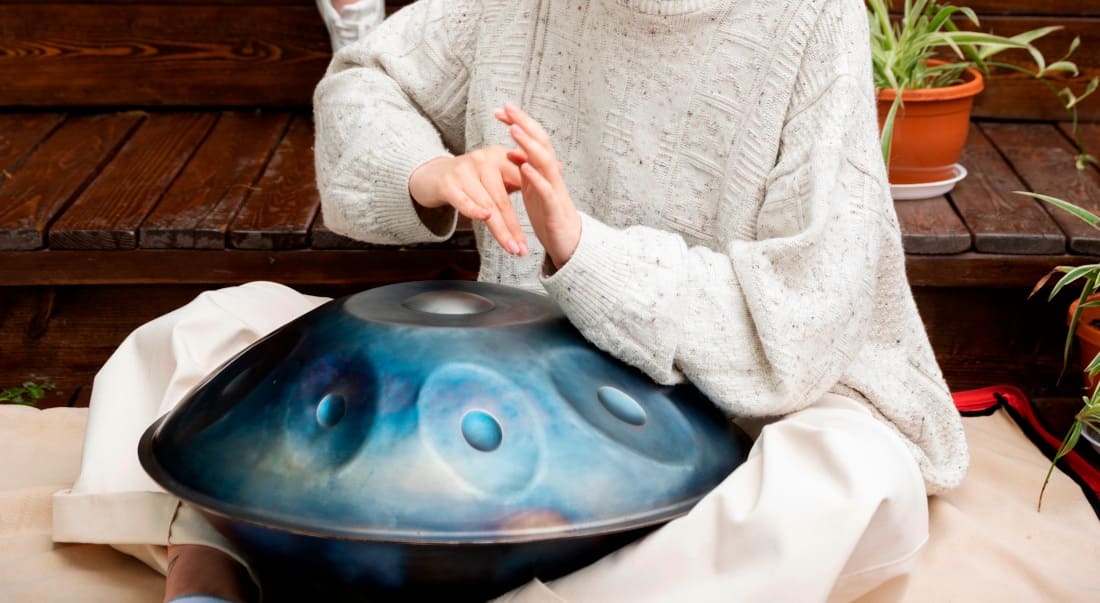
Who are the professionals who make handpans in Switzerland?
Before we talk about today’s makers, we can’t skip the history. The handpan descends directly from an instrument born in Bern: the Hang. We owe this invention to Felix Rohner and Sabina Schärer, two steelpan tuners who, in the late 1990s, were looking to create something different. The first Hang was born in 2000, presented at the Frankfurt Fair in 2001, and became a worldwide success. Be careful not to mix everything up: the Hang is not a “handpan” in the strict sense. It is PANArt’s registered trademark. However, in the early 2000s, demand quickly outstripped supply, prompting other artisans around the world to create their own versions, renamed “handpans,” a term coined by Kyle Cox, a handpan maker in the United States, in 2007. Now, let’s list the creators of this sound sculpture.
Zaora Instruments: Patience as a Signature, in Le Locle
Maël Auteri has been shaping his handpans under the name Zaora Instruments since 2017. His workshop is based in the town of Le Locle in the canton of Neuchâtel. This professional says he takes a great deal of time to create his sound sculptures. Patience is a true virtue for him, and he refuses to rush his instruments just to meet a predetermined deadline. Maël Auteri works with 1 mm nitrided steel on 53 cm diameter shells and offers custom scales combined with bottom notes (notes placed on the lower shell of the handpan). Prices for his instruments start at around NZ$1970 to NZ$2960 for an 8-note model and increase gradually depending on the request.
ARRA Handpan: Responsible Craftsmanship on the Shores of Lake Neuchâtel
Behind ARRA Handpan is Jonas Lambelet, who has been making his handpans in Marin-Épagnier, on the shores of Lake Neuchâtel, since 2015 as part of the Singing Steel Project. He has developed two clearly distinct models. The first is the Nova, a high-end model with long sustain and a crystalline timbre, featuring highly responsive notes and priced at around NZ$5910. The second is the Vana, a model with brighter, more ceramic-like tones, priced around NZ$3940 for a 9-note stainless steel handpan, making it more accessible from a financial point of view. Here is an example of what the workshop produces:
Djillhi Instruments: Artisanal Sensitivity from the Canton of Fribourg
Behind the Djillhi Instruments brand is Jérémie Poux, based in Ponthaux, a small village in the French-speaking part of the canton of Fribourg. He has been making his handpans since 2015 and cultivates a very personal, almost intimate approach to instrument making: he loves to experiment, so Djillhis are constantly evolving, alternating between custom instruments and pieces shaped by his inspiration in the moment. What sets Djillhi apart is especially the material. The maker works with deep-drawn nitrided steel (DC04), deep-drawn stainless steel, and ember steel, on shells measuring 53 cm inside and 55 cm outside. The nitriding process is carried out in Switzerland according to his own recipe, which he has been refining since 2015. The result: instruments with very long sustain, perfect for meditative playing. Since June 2019, each centre note has featured a distinctive visual mark inspired by wood grain. The lowest centre note he has made is a G3. Price range: about NZ$2960–NZ$3940 for an 8- to 9-note handpan, delivered with a case.


Soma Sound Sculptures: From Banker to Steel Sculptor, in Appenzell
Daniel Bernasconi’s journey is one of the most novel-like stories on the Swiss scene. After earning his economics degree in 2005, he spent about five years in Swiss finance advising ultra-high-net-worth clients for one of the world’s largest banks. Suit, tie, Excel spreadsheets, and conference calls… until something clicked. He quit, sold almost everything, and set off travelling for several years with a Halo handpan he had bought two weeks before leaving. Back home, he found a teaching job in the Alps and devoted every free moment to hammering, especially at night, when the neighbours were asleep. Two often frustrating years later, his first prototype came to life. Soma Sound Sculpture was born. To get one, expect to wait about 2 months and pay a little under NZ$5910 for an entry-level model.
Awen Handpan: When Two Swiss Makers Join Their Hammers
Awen Handpan is a special case: it is not a single isolated artisan, but the meeting of two makers already mentioned. This workshop is the union of Jérémie Poux (Djillhi Instruments) and Maël Auteri (Zaora Instruments), who decided to combine their expertise to create a shared brand, with a workshop-boutique inaugurated in April 2025 in the town of Le Locle. That is also why they have somewhat set aside their own brands since then to focus on this mutual project. You can make an appointment to come and try the few handpans in stock. Otherwise, you’ll need to order a custom model, which will take about 3 months to leave the workshop, at a price of NZ$4930 for a 9-note model, with an additional NZ$490 per extra note. It’s a fairly rare collective approach in a field where everyone generally works on their own. Listen to one of their models in the video below:
EchoSoundSculpture: the AsaChan, a High-End Benchmark in Aargau
This is probably the most renowned Swiss maker on today’s international scene. The story begins in 2009, when Thai artist Ezahn Bueraheng, who had settled in Switzerland after his marriage, decided to start making handpans in his basement in Rupperswil. A graduate of Silpakorn University of the Arts in Bangkok, he dreamed of becoming a luthier. As he explains himself, it took three years before the first handpan/pantam prototypes appeared, in 2012.
The instrument produced by EchoSoundSculpture is called the AsaChan. This name comes from the Thai “อัศจรรย์,” which means “miraculous.” In 2013, Flavio Brant Alvim met Ezahn Bueraheng and trained in handpan making under him. They worked together to form EchoSoundSculpture GmbH in 2015, with a workshop in Lenzburg, then moved to Oberkulm, still in Switzerland. Ezahn Bueraheng retired at the end of 2022, and since 2023, Flavio Brant Alvim, co-founder of the company in 2015, has become the workshop’s sole maker, supported by musicians Damien Vielle and Drui Glueck Schmid, who promote the brand.
On the technical side, the AsaChan is available in 53 cm, 50 cm, and a 46 cm MiRim version. The Yukon model adds a layer of high notes around the Ding and extends beyond one octave, totalling more than 20 notes when counting the bottom notes. EchoSoundSculpture develops its own steel and its own treatment process, and works with 1.25 mm shells renowned for their sustain and ceramic-like feel. Expect around NZ$2960–NZ$3940 for 8 notes, and over NZ$4930 for the most expanded models. Production is very limited, which can mean waiting several months to get your instrument.
Get started now with an affordable handpan
Switzerland has few handpan makers. From the historic cradle of PANArt in Bern to the young French-speaking workshops of Le Locle and Neuchâtel, through the excellence of EchoSoundSculpture in Aargau and Soma’s singular path in Appenzell, each workshop carries its own story and a different sound signature. Thanks to all the information you’ve found in this article, you now certainly have a clearer view of everything Switzerland can offer in terms of handpan makers.
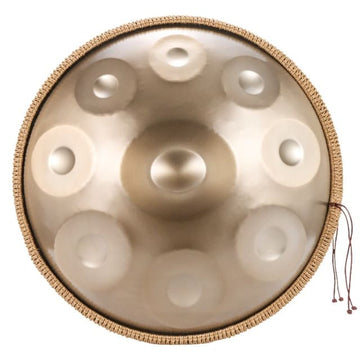
However, most of these workshops have very high prices and production lead times of several months. If you’re looking for a handpan that is available immediately at a more reasonable cost, I recommend the Instruments du Monde shop. You’ll have access to several dozen good-quality handpans with prices starting at around NZ$1580, making them accessible to as many people as possible. One example is the excellent 9-note melody handpan tuned to a D Kurd scale.
Discover the melody handpan right now by clicking the image below:
Now let's head a little further north and take a look at the handpan makers plying their trade in Belgium. You'll see that this small European country is also home to a few under-the-radar craftsmen who are real gems in terms of talent.


