



Written by Ambre Montespan on Oct 19, 2026

Table of contents:
Eager to treat yourself to a handpan but want to hold one in your hands first? Wondering where you can try this musical instrument near you? Is it possible to compare several models before making your choice?
As a handpan player for over 10 years, I’ve had the opportunity to try dozens of handpans at makers’ workshops, stores, and festivals. That’s why I can show you all the places where you can play one before buying it.
It’s becoming increasingly difficult to find a place to try a handpan. The easiest option remains an online store’s return policy, since makers’ workshops, showrooms, beginner classes, and festivals are all rare these days. Renting is also an option.
Once you’ve read this article, you’ll know exactly:
- Why it’s worth trying a handpan before buying it
- How to try this musical instrument at home
- Where to try a handpan
- What to check when trying a handpan
This way, you’ll easily be able to find a way to try this percussion instrument, no matter where you live. You’ll also be able to recognize a high-quality handpan when you test it.
Now, let’s take a look at why it’s important to try a handpan before buying it!
Why should you try a handpan before buying it?
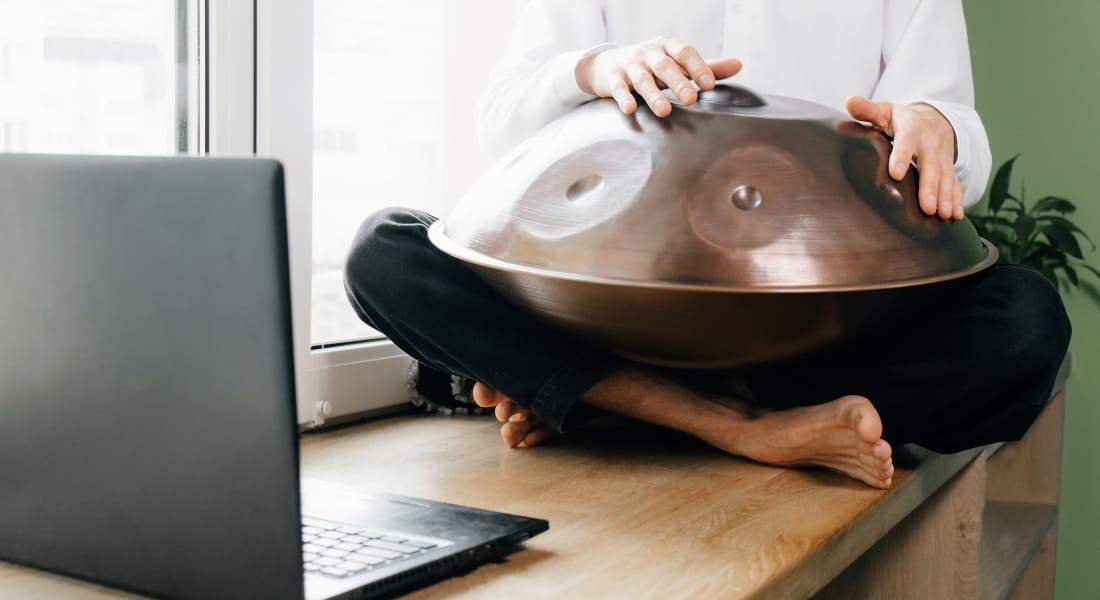
It’s important to know that no two handpans are exactly alike. Many people still call the instrument a “Hang drum” in reference to the Hang, which was created in Switzerland in 2000. Each note and its harmonics are tuned by hand. As a result, the tone, sustain, and responsiveness vary not only between makers but also between individual instruments, so two handpans tuned to the same scale won’t necessarily sound the same under your fingers. A video also can’t capture the feel, the resonance you’ll experience in your body, or the way the instrument responds when you play it softly or loudly. Some workshops acknowledge this themselves, noting that the actual sound of their handpans is more subtle than their recordings suggest.
The instrument’s scale is another reason to try it. Since a handpan’s tuning is fixed, the scale you choose will determine every note you’ll be able to play for years to come. To compare scales before your trial, read my guide to choosing the right scale for your future handpan.
Can you try this percussion instrument at home?
Yes, you absolutely can try a handpan at home. In fact, this is the option I personally recommend, given how difficult the other options discussed later in this article can be to arrange.
First—and this is the most appealing option—you can take advantage of a 14-day return window. When you buy online from a professional seller, applicable law gives you at least 14 days to change your mind and return the instrument. This essentially gives you a home trial, which some online stores extend to 30 days. Laws can vary depending on your country of residence, but when an online store provides this option, you have the stated period to exercise it. Once you receive the instrument, you can try it as much as you like throughout that period. If the handpan isn’t right for you, you can return it and choose another one without ever having to explain why. This way, you’ll have far more time to test the instrument than you would at a workshop, where you may be given only a few minutes. Plus, no one will watch you play or pressure you during your trial. You’ll be free to explore the handpan’s possibilities exactly as you wish.
It’s also important to note that when you buy a handpan in person, you don’t benefit from the same return window. You won’t be able to return it unless the seller allows you to, which is rarely the case. The only thing to keep in mind when buying online is that you must return the handpan in like-new condition, exactly as you received it. You’ll therefore need to take exceptional care of it while testing it.
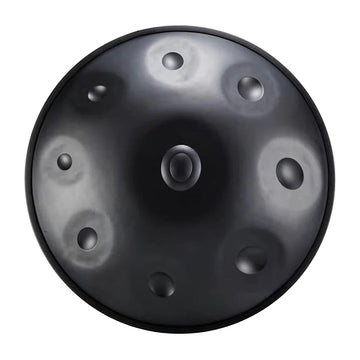
Renting a handpan is also an option and allows you to spend several weeks with the instrument, since a handpan doesn’t sound the same in a store as it does in your living room. Expect to budget around $120 per month. You will inevitably be asked to provide a security deposit check for the instrument’s full value, which could be several hundred or even thousands of dollars, and you’ll need to pick up and return the instrument in person. The main problem is that a rental handpan isn’t necessarily for sale. This means you can try a handpan, but not necessarily THE handpan you’ll eventually buy. Some rental companies sell their handpans and deduct some or all of the rent you’ve paid if you later purchase that model from their catalog. Others deduct none of it. Before signing, take the time to check this point, along with the minimum rental period, deposit amount, and insurance coverage. Also remember to inspect the instrument’s condition at the start of the rental, as well as any included accessories, such as its case. You’ll also need to pay attention to the quality of the handpan you receive, since it’s well known that rental instruments tend to be less carefully maintained and are often out of tune after being used by multiple renters who may not have handled them with proper care.
Where can you try a handpan in person?
You’ll find a few places to try one these days, although they’re becoming increasingly rare. Not all of them are easy to reach, so I recommend calling ahead to check which models are available and reserve a quiet time slot. Inventory at a workshop or store can change very quickly.
Can you try this instrument at the maker’s workshop?
At a maker’s workshop, you’ll be able to try the largest selection of handpans made by a single artisan. You’ll almost always need an appointment, and sometimes visits are only available during periods announced in advance. Some workshops will even prepare the exact model you’d like to play. If you find a model you like, you may be able to take it home right away. Keep in mind that most makers work to order, with lead times ranging from a few weeks to several months. Therefore, if you want to buy a handpan with a specific number of notes or in a particular key, that exact model is very unlikely to be available from a maker who typically builds instruments to order. To find a workshop, see my list of handpan makers in France, for example.
Do specialty stores have handpans available to try?
When it comes to music stores, it’s best to be cautious. Few have several handpans available to try because the instrument remains relatively unknown compared with guitars or pianos. However, a few specialty retailers do keep several handpans in stock. The widest selection can be found in showrooms across Germany, Austria, and Switzerland, where networks of makers offer models from multiple brands by appointment in dozens of cities. Some will even ship a handpan you’ve spotted online to the nearest showroom free of charge.

In the Netherlands, the country’s largest store devotes 2,691 sq ft (250 m²) to handpans and welcomes visitors six days a week, with or without an appointment. Meanwhile, a store in the Czech Republic typically keeps 30 to 40 handpans available to try. In both Barcelona and Madrid, appointment-only sessions are specifically designed for comparing several models. Finally, a Tokyo showroom in Japan offers a free trial lasting about 30 minutes with a reservation.
Which classes and workshops provide handpans?
If you don’t own an instrument yet, a beginner workshop is another way to try a handpan. Most workshops lend you a handpan for the session, and no musical knowledge is required. For example, one-day workshops accommodate up to 9 people for $150 and let you try numerous handpans from different makers and made from different materials. You’ll also find introductory workshops lasting 2 to 4 hours in Spain and the Netherlands, with an instrument included. To find the option that’s right for you, read my article on all the ways to take handpan lessons.
Can you judge a handpan’s quality at a festival?
Handpan festivals bring together players, musicians, and makers every year. They’re among the few places where you can try handpans from numerous artisans in a single day. Some makers even offer introductory lessons using loaner instruments. However, not every festival has a makers’ market, so it’s best to ask the organizers in advance whether you’ll be able to try instruments on-site. Read my article on the best handpan festivals to make the most of your visit.
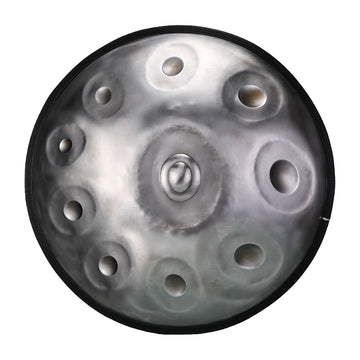
Finally, meetups with other players are an often-overlooked option. There are many social media groups for players in France, Belgium, Switzerland, and the United States. A simple message is often all it takes to find a nearby musician willing to let you try their handpan. You can also politely ask a player you happen to meet on the street. Out of respect for the person lending it to you, remove your rings and bracelets, then strike the note very quickly, as if you were touching something extremely hot. This prevents scratches and detuning. These groups also serve as marketplaces for used instruments; I explain the precautions to take in my comparison of new and used handpans.
How do you properly evaluate a handpan, and what should you check?
To get the most out of your handpan trial, it’s best to prepare a little beforehand. First, choose a quiet time because a noisy environment will prevent you from hearing how long each note rings. Also, ask in advance for the scales you want to compare, since some trial locations always keep a D Kurd handpan on hand but require you to reserve any other scale when making your appointment. Finally, it’s a good idea to record short clips on your phone so you can listen to each handpan again once you’re home.
During the trial, first play each note individually, then play several notes together. A good note should remain in tune and stable even when struck hard: if it starts vibrating irregularly, it was poorly worked. A tuner will show you how far each note deviates in cents, which are hundredths of a semitone relative to the reference pitch. Some makers state a tuning accuracy of about 5 cents. Next, listen to the sustain, meaning how long the note continues to ring after it’s struck. Sustain is longer on a stainless steel or Ember Steel handpan than on a nitrided steel model, whose warmer sound is better suited to percussive playing. Each note should also produce clear harmonics without any buzzing.
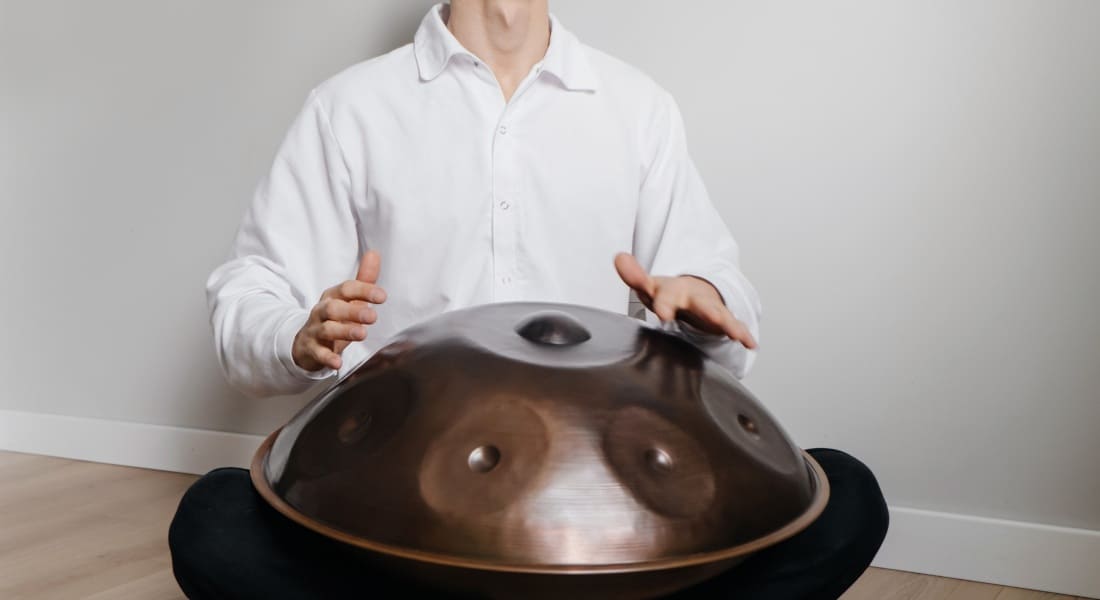
You should also check the crosstalk between notes. This occurs when striking one note causes neighboring notes to sound. Some interaction is normal, especially between a note and its octave, but the issue occurs more frequently on models with many notes. The volume should also remain consistent from one note to the next, and the handpan should respond equally well to soft and forceful playing. Next, run your finger along the inner edge of the opening on the underside of the instrument, called the Gu, which should not be sharp. Once you’re seated with the instrument on your lap, you can assess its weight and shell size, which ranges from approximately 20 to 24 in (50 to 60 cm).
Try your handpan at home before making it yours!
To try a handpan, you can buy one online and take advantage of the return policy, rent one, visit a maker’s workshop or showroom, attend a beginner workshop, or go to a festival. Thanks to the information you’ve just read, you also know what to listen for and what to check during your trial so you can recognize a high-quality instrument.
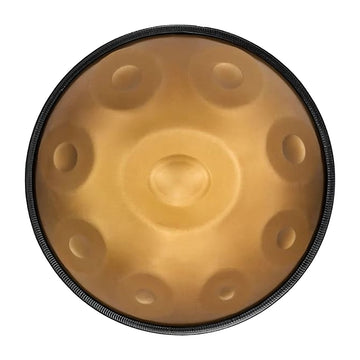
However, there isn’t always a place nearby where you can try one. Festivals and workshops may only take place once a year, which might not work with your schedule. That’s why I personally recommend the Instruments du Monde store, which gives you 30 days to try your handpan at home and return it if it isn’t right for you, without having to give any reason at all. For example, you can try this D Kurd handpan at home, tuned to today’s most popular scale.
Discover this handpan now and try it at home by clicking the image below:
Now that you’ve read these tips, do you know the difference between a Hang drum and a handpan? Discover it in this fascinating article exploring the historical roots of this musical instrument.


