



Written by Ambre Montespan on Mar 14, 2023 · Updated on Oct 15, 2026

Table of contents:
So, you’ve made the (very good) decision to buy a kalimba. But with so many options available, you’re not sure how to choose the wood? You suspect that the wood used to build this African musical instrument will influence the sound, but you don’t know exactly how. Is there such a thing as a bad wood choice for a kalimba?
After more than 10 years of passion for this West African instrument, also known as the thumb piano, I’m here to answer all your questions and help you pick the right wood for your kalimba.
Depending on the hardness of the wood, sound travels differently, and you’ll hear it differently. Because every wood species is unique, it’s important to decide what kind of tone you want so you can make the right choice. On top of that, this decision can also affect the kalimba’s look and even its scent.
By the end of this article, you’ll know exactly:
- the effect of wood on the sounds produced by the kalimba
- the mistake to avoid when selecting a type of wood
- the characteristics of the woods most commonly used in kalimba manufacturing
This insight will help you choose the wood for your iconic African instrument with confidence and avoid common pitfalls. Once you have the right kalimba in hand, learning to play will be easier, and you’ll see results much more quickly.
Now it’s time to dive in.
Why is choosing the wood for your kalimba so important?
Choosing the wood for your African instrument is an important decision. While early kalimbas were made from calabashes, things have changed considerably since then. In fact, this choice greatly influences sound transmission and sometimes even the kalimba’s scent and design. After reading this article, you’ll understand exactly why.

What effects does wood have on musical instruments?
First, to fully grasp how the tone of the kalimba is shaped by the wood it’s made from, it helps to review a few basic physics concepts before exploring how wood affects sound waves. Once you understand this, you’ll be able to choose the kalimba that’s truly right for you.
1 – The physics of sound
The sound produced by a musical instrument is actually a vibration of the air that spreads in the form of a wave. This phenomenon is easy to picture if you compare it to a stone thrown into a lake: the ripples spreading from the impact point are similar to the sound waves produced by an instrument. Whether the kalimba’s soundboard consists of a single board (known as “flat”) or has a resonating chamber/resonator (known as “hollow”), the vibrations produced by the steel tines will be absorbed by the wood to a greater or lesser extent depending on its hardness.
2 – The effect of wood on sound vibrations
The harder the wood, the more the sound waves will bounce off it. Conversely, the softer the wood, the more they will be absorbed. Thus, a kalimba with a hardwood resonating chamber will tend to resonate much more than the same kalimba made of softer wood. As a result, the notes will last longer—ideal for a percussionist playing in front of an audience. Conversely, a kalimba made of soft wood tends to produce more diffuse, even intimate notes, perfect for relaxation, yoga, or music therapy.
3 – Scientific studies on wood hardness
To measure wood hardness, Austrian dendrologist Gabriel Janka ran the same test on every wood type to compare its resistance. He dried each wood species to the same moisture level and measured the force required to drive half of a steel ball about 0.43 in (1.1 cm) in diameter into the wood. Once the ball was embedded, he recorded the force applied (in newtons) and compiled the results in a table called the Janka hardness chart.
Therefore, the higher the Janka hardness number, the harder the wood is considered to be. You can find the Janka hardness of several hundred different wood species on this website. The chart is huge, so below we’ve selected and summarized the woods most commonly used for kalimbas.

The kalimba, a traditional idiophone made largely of wood
The thumb piano, also known as mbira or sanza, is a percussion instrument belonging to the idiophone family. This means that the sounds produced by this family of instruments come from the material they’re made of. Apart from the metal tines of the kalimba, which are now almost exclusively made of steel, the rest of this African instrument is made of wood. Therefore, it’s obvious that the wood choice matters for an instrument that’s mostly wood and whose sound is shaped in part by that material.
Choose a kalimba design that you like
Next, the choice of wood for your kalimba will also influence its design. Each type of wood has its own unique grain. Grain (or veining) refers to the irregular lines that are particularly visible when a tree trunk is sawn. When solid wood is used to make a musical instrument, these lines may or may not be visible depending on the layer of paint or varnish applied to the instrument. We recommend choosing a kalimba with or without pronounced grain, but above all with a design that you like. It can also be an acrylic model instead of wood. This will make learning easier, with results you can feel right away.
A precious wood for your thumb piano?
Some woods are considered more precious than others due to their rarity. As a result, the kalimba can become a truly prestigious musical instrument. Black walnut and sandalwood are good examples of precious woods. Kalimbas made from these materials are generally more expensive than those made from more common woods (typically 2 to 3 times the price). However, that doesn’t necessarily mean they’re higher quality. Mahogany kalimbas, which are often very affordable, are excellent instruments that simply offer a different tone.

A captivating scent for your musical instrument
Finally, some kalimba woods give off a particularly pleasant fragrance. This is especially true of sandalwood, used in perfumery for centuries, and camphor, used in Chinese medicine and in the production of tiger balm. Keep that in mind when choosing your kalimba if you’d like to enjoy these scents while you play.
Mistakes to avoid when choosing a quality musical instrument
For a high-quality kalimba, we recommend choosing solid wood. Solid wood comes directly from the tree and is a raw material particularly prized by cabinetmakers for its high quality.
In contrast, there are kalimbas made from reconstituted or agglomerated wood. These woods are actually chips considered industrial waste, which manufacturers have found an ingenious way to recycle by reconstituting boards from this waste mixed with various glues and chemicals to agglomerate the whole. Because of the chemical treatment these woods undergo, they can release harmful particles into the air—known as volatile organic compounds (VOCs). If the term “solid wood” is not listed in the specifications of your African musical instrument at the time of purchase, it most likely means it is made from reconstituted wood.
Since you’ll be holding your kalimba in your hands and near your face, choose an instrument crafted from solid wood—it’s far superior and safer for your health.

What are the characteristics of the different types of wood used for kalimbas?
Below is a list of the woods most commonly used to make kalimbas. These woods are classified according to the Janka scale, from softest to hardest. Use this list to select the wood that suits you best!
Spruce
Spruce is a coniferous tree found in Europe that is used to build house frames. It has beautiful grain and is widely used in luthiery for violins and guitars—for good reason, since it has outstanding acoustic properties. Spruce is very light, but also very soft, with a Janka hardness rating of 647. If you want an instrument for relaxation, spruce is a great choice.
Mahogany
Mahogany is not a single species of tree, but rather the name given to several tropical trees (around 250) from the Meliaceae family that feature red or pink wood. The sounds produced by this wood are rich, melodic, and very pleasing to the ear, which is why xylophones, marimbas, glockenspiels, balafons, and other tuned percussion instruments are often made from it. Pleasant to the touch, mahogany remains excellent value for money for a kalimba. It is therefore recommended for beginners who want to learn this exotic musical instrument, but also for children as a musical introduction or educational toy. Mahogany scores 800 on the Janka scale.
Pine
Pine is a yellowish softwood found in Europe, Asia, and America. It is not widely used in instrument making, like bamboo, because it is quite fragile. With a Janka hardness rating of 870, it does, however, offer different tones that may be appreciated by some kalimba players. This wood is worth considering if you want to discover tones that are different from those of mahogany, for example.

Camphor
Native to Asia and now found on several continents, the camphor tree yields wood with a pleasant scent that lingers for several years after cutting. Regarded as a precious wood, it is not typically used in instrument making and rates 930 on the Janka scale. Its distinctive fragrance is truly its standout feature.
Walnut
Walnut is a fruit tree found in Europe and Asia. It is highly prized in instrument making for harps, as well as for the sides, necks, and backs of acoustic guitars, because it bends easily. It has a Janka hardness rating of 940 and a beautiful grain. Walnut is therefore recommended for musicians who want a visually unique kalimba with pronounced grain.
Black walnut
Black walnut is a particular species of walnut that comes from America. Much darker than its European and Asian cousin, black walnut displays beautiful grain reminiscent of wenge. Especially resistant to moisture, it is favored for luxury furniture and marquetry. With a hardness of 1010, it’s the go-to choice for musicians seeking a high-end instrument.
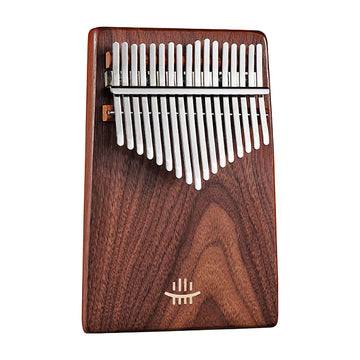
Beech
Beech is a European deciduous tree that is rarely used in instrument making because it is difficult to work with. However, it can be found in the design of stretched skin or membrane drums, drumsticks, and a few other percussion instruments. This is because working with beech tends to create a lot of splinters. Nevertheless, it remains an interesting wood in terms of sound and has a hardness of 1300 on the Janka scale.
Sapele
Sapele, whose real name is Entandrophragma cylindricum, is a highly prized, fairly rare pink wood from the Congo. It has a hardness rating of 1439 and is not used in traditional instrument making due to its rarity. However, you can find some kalimbas and other African instruments made from this wood, which will inevitably bring you closer to Africa thanks to its origins.
Maple
Maple, from which the famous Canadian syrup is made, can also be used sparingly in instrument making for guitar sides or to make flutes, although it is mainly used to make floors. With a hardness rating of 1500, this light-colored wood produces rich tones. It offers an ideal balance of resonance and diffuse notes, helping you stay zen.
Red pine
Red pine is only found in eastern Canada. It is a hard wood (1630 on the Janka scale), solid and used for building frames. A red pine kalimba will be very resistant and highly durable. Globetrotters take note: this wood makes the perfect musical instrument to take with you on all your travels.
Acacia
Acacia is a beautiful golden-colored wood that is pleasing to the eye. It is not often used in instrument making because it is difficult to work with, but it is well worth the effort! Its hardness is 1750. A few rare kalimbas are made from this wood, but they remain relatively expensive.

Sandalwood
Sandalwood has been used for over 4,000 years in perfumes and beauty products. It has a distinctive scent that you can enjoy while playing the kalimba. This type of wood grows in Asia and has a hardness rating of 1798. If you love this fragrance, then this wood is for you!
Padauk
Padauk is an exotic reddish wood that is very hard (Janka hardness rating of 2219). It is a tree that grows in Africa and was originally used in ancient times to make mbiras, the ancestor of the kalimba. If you’re seeking a traditional instrument, this is the ideal wood—provided you’re willing to pay the price.
Take good care of the wood you choose!
As we’ve discussed, choosing the wood for your kalimba is a crucial step that should be based on your expectations in terms of African sounds and design. Now you’re equipped to choose the ideal wood for your kalimba, plus the pitfall to avoid. As an informed shopper, you can select the perfect African musical instrument for any situation—whether for yourself or as a thoughtful gift.
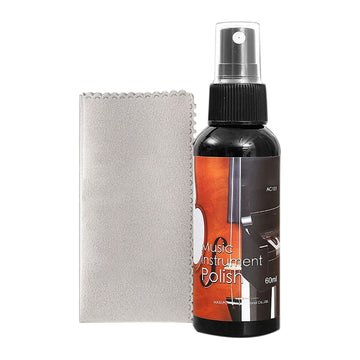
However, wood is a living material that needs regular, careful maintenance to ensure it lasts as long as possible. UV rays gradually make wood dull and brittle. Your kalimba may deteriorate or even break. To avoid this disaster, it is essential to nourish the wood with a specific maintenance oil. This will protect the instrument from dust, moisture, and pests while maintaining its shine and luster.
Purchase kalimba maintenance oil by clicking on the image below:
Now you know all the ins and outs of wooden thumb pianos. However, there are also acrylic glass models that may interest you. Of course, they differ from their wooden counterparts. Want to know which is the best choice? Then take a look at our comparison guide between wooden and acrylic kalimbas. This will help you choose the instrument that's right for you. Or better yet, check out our guide dedicated to the kalimba.


