



Written by Ambre Montespan on Mar 14, 2023 · Updated on Sep 25, 2026

Table of contents:
Do you own a kalimba or are you thinking about buying one soon? Are you wondering whether you really need long nails to play beautiful melodies on this percussion instrument? What’s the ideal nail length? And can you still play the thumb piano with short nails?
I’ve been playing kalimba for over 10 years, and I’ve played with my nails pretty long and also with them very short. So I can share my real-world take, plus a few tips, so you can fully enjoy this charming instrument: the kalimba.
You don’t need very long nails to play the kalimba. However, having nails that extend a couple of millimeters (about 1/16 in, or 1–2 mm) past the pad of your thumb does offer an advantage—one you can also make up for with different accessories.
By the end of this article, you will know:
- What the ideal nail length is for playing the kalimba
- How to play better if you don’t have nails
- What solutions are available if you have large fingers
So, whatever your situation, you’ll be able to get the most out of your African instrument and produce beautiful, soft, soothing sounds.
Now, let’s get right to the point!
What should your nails be like to play the kalimba well?
It’s absolutely possible to play the kalimba with short or long nails, although there’s a length that tends to work especially well for this instrument. Let’s break it down.
Is it possible to play the kalimba with short nails?
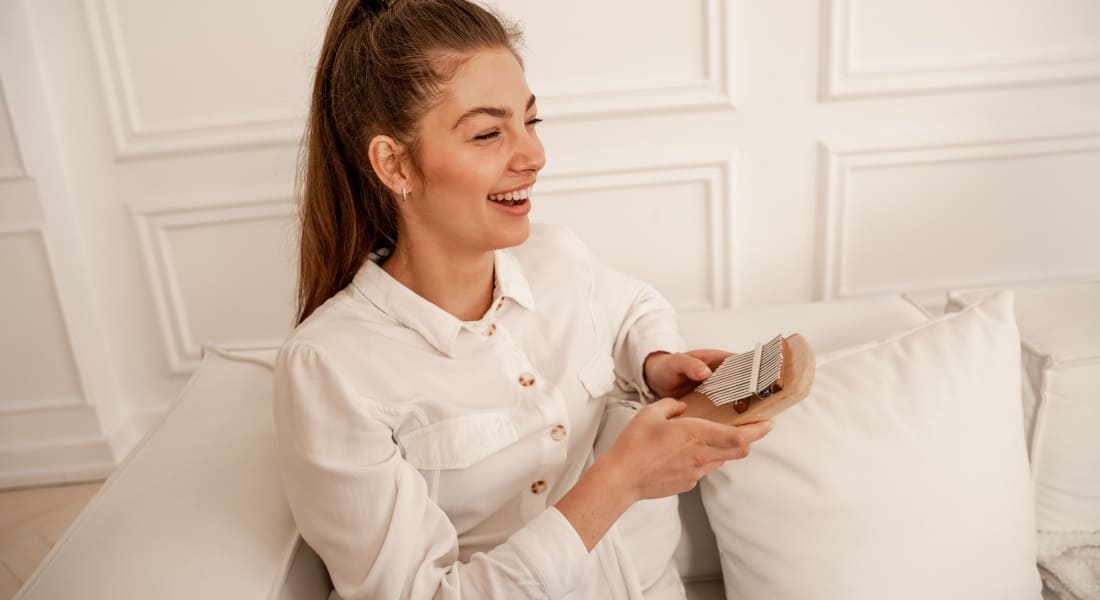
If you don’t want to—or simply can’t—grow your nails for any reason, you can absolutely still play the kalimba. Instead of using your fingernails, you’ll simply use the pads of your thumbs. That said, this method does come with a few drawbacks.
The first is precision, because it’s harder to pluck the tines quickly with your finger pad than with a fingernail. The second is discomfort: after a while, you may start to feel pain in your thumbs from repeatedly pressing on the tines. Guitarists deal with a similar issue, and it usually resolves on its own—after a few weeks or months of practice, a natural callus forms and the pain goes away. Finally, if you want to do a glissando (playing several notes in a very short time), it’s much tougher with skin, which is rougher than nail keratin. So sliding across the tines takes more effort.
If you don’t know what a glissando is yet, check out our article on how to play the kalimba.
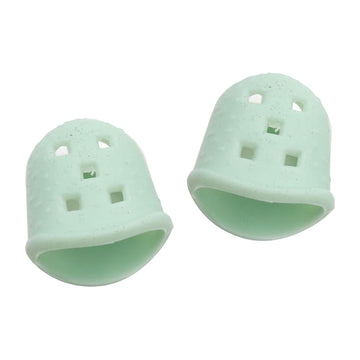
Fortunately, you can get around these challenges with a few accessories. One option is silicone finger protectors. They work like a thin glove and cover most of your thumb’s first joint, helping prevent pain and making glissandos easier. Another solution is to buy a thumb pick, which acts like an artificial fingernail. It slips on like a ring, and the plastic extension replaces the function of a longer nail.
Of course, you can also simply grow your nails out. But how long should they be?
What is the ideal nail length for thumb piano playing?
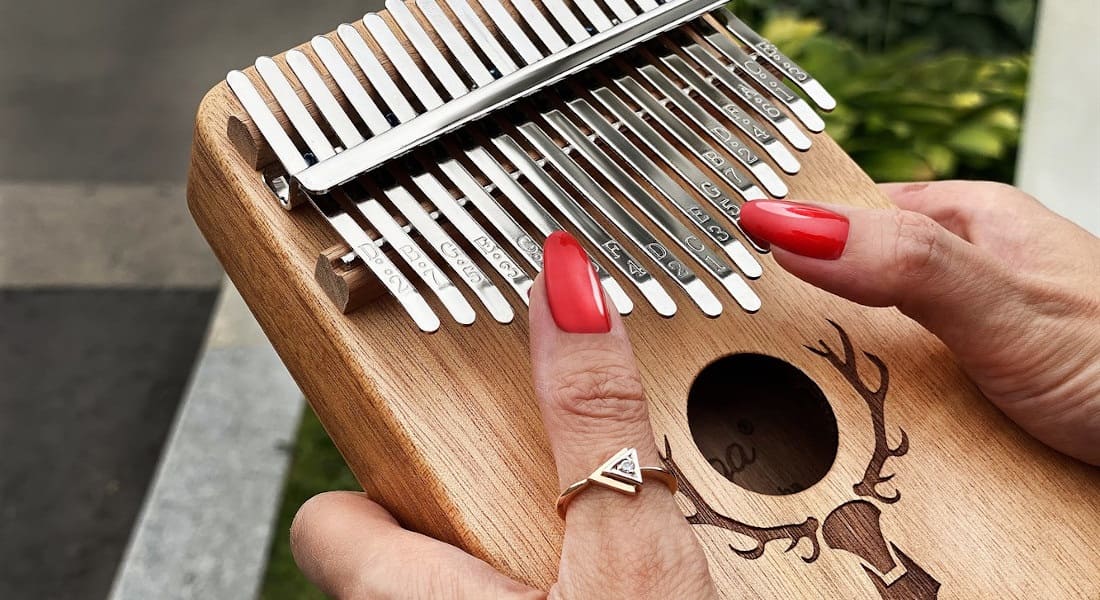
Obviously, nails that are too long will get in the way when you play your mbira. In my personal experience, the perfect length for playing the kalimba is between about 0.04 and 0.08 in (1–2 mm). You don’t measure this from the front while looking at your nail. Instead, turn your thumb so you can’t see the nail from your angle. Then measure the distance between the top of your thumb’s skin and the edge of your nail (max 2 mm).
If you trim your nails, an almond or rounded shape tends to work best. Avoid square shapes as much as possible—you’ll lose precision and may accidentally hit a neighboring tine while you play.
Can nails break when playing this musical instrument?
Yes, it’s possible for a nail to break during a practice session. It depends on how strong your nails are. Some players can use their kalimba for days without any risk, while others need to be more careful. If you’re in the latter group, you can apply a coat of nail polish to increase overall hardness. If that still doesn’t solve it, give it time: after a while (and after a few breaks), your nails often naturally toughen up and become strong enough to handle regular thumb-piano playing.
Is it possible to play the mbira with large fingers?
While slimmer fingers can be a real advantage for playing songs on the kalimba, having thicker fingers isn’t a deal-breaker either. Over time, you’ll adapt to your own anatomy. That said, because everyone’s different, some people have fingers that are much larger than average, which can make playing the kalimba tricky due to the relatively narrow spacing between the tines.
In that case, the best option is to choose a kalimba with two rows of tines, so there’s more space between them. That’s the case for the model shown in the video below:
You can learn more about this instrument by clicking on this link. With this model, the kalimba becomes accessible to everyone, even those with wider fingers.
Protect your fingers when using your musical instrument
Having short nails shouldn’t stop you from buying or enjoying a kalimba. While reasonably long nails can make things easier, you can still enjoy the kalimba even with short nails.
However, playing using only your finger pads can inevitably cause issues—pain, reduced precision, or not being able to pull off certain techniques that are genuinely fun to learn. That’s why Instruments du Monde recommends using thumb picks so you can enjoy every side of this beautiful instrument.
Get your picks now by clicking on the image below:
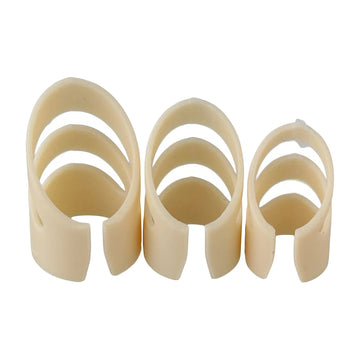 Our pickPlay the kalimba beautifully, even with short nails, thanks to these picksShop kalimba picks
Want to record the songs you play on your instrument? In that case, you’ll want a kalimba microphone that captures every detail of its tone. Click here to learn which one to choose. You’ll find several types at every price point. Also take a moment to read our complete kalimba guide to learn everything there is to know about this percussion instrument.


