



Written by Ambre Montespan on Mar 14, 2023 · Updated on Sep 25, 2026

Table of contents:
You may have recently discovered the kalimba, a tiny musical instrument that vaguely resembles a piano but is played with your thumbs. But why play this musical instrument? Is it really worth learning the kalimba? What benefits can you get from this small instrument with African roots?
As someone who’s been playing the kalimba for well over 10 years, I realized long ago the real value of practicing this instrument. There are plenty of reasons to start, and in this article, I’ll walk you through them clearly.
There are easily a dozen reasons why playing the kalimba is both useful and rewarding. It’s easy to pick up, suitable for all levels, produces a one-of-a-kind sound, improves hand coordination, strengthens memory, and it’s also relaxing and used in music therapy.
By reading these few lines, you’ll learn exactly what the many advantages and benefits of playing the kalimba are, depending on:
- its accessibility
- its ability to boost memory, improve hand coordination, and help the player relax
- the unique sounds it produces
- its ancient African origins
You’ll soon see that the kalimba may be a lesser-known instrument, but it truly deserves your attention. Why not treat yourself to one and enjoy the many benefits it has to offer?
Let’s start right now by looking at the reasons why you should play the kalimba.
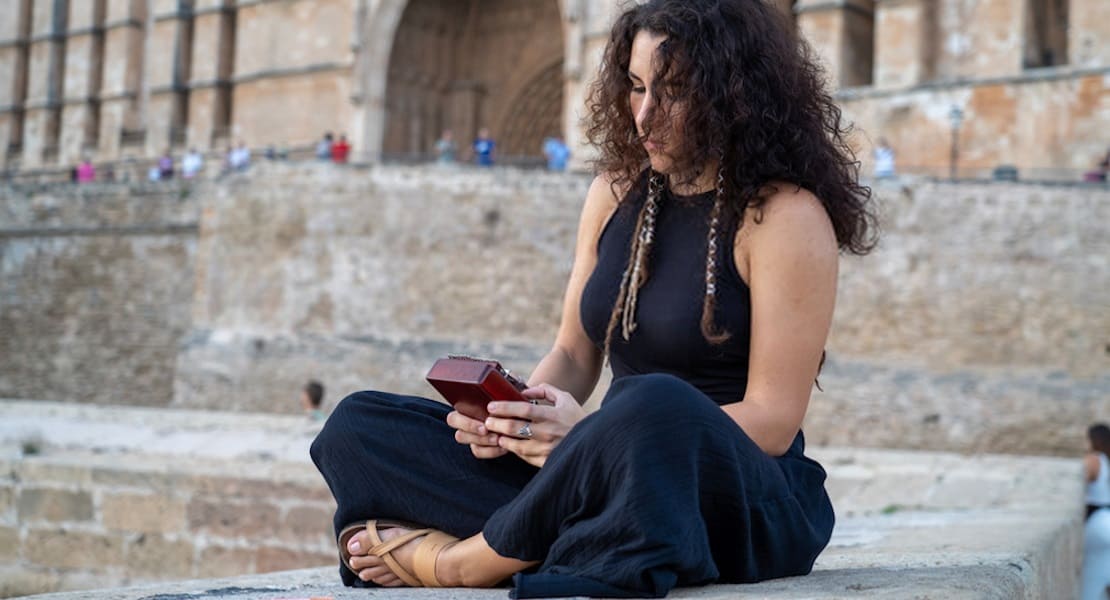
The kalimba is one of the easiest instruments to learn
The main reason to answer the question of why you should play the kalimba is simple: it’s very easy to learn. Unlike instruments like the violin or guitar, the kalimba makes it hard to hit a wrong note as long as it’s properly tuned. It’s a bit like an acoustic piano, but much simpler because it has far fewer notes. Each time you pluck a steel tine, you’ll always get the same pitch, with virtually no chance of making a mistake.
This is why the thumb piano is very quick to learn. In just a few dozen minutes, most people can play simple, catchy melodies. What’s more, you don’t need to study music theory to play the kalimba. Most sheet music simply shows you the order in which to press the numbered steel tines. Just follow along, and you’ll be making beautiful music in no time—it’s that easy.
Many kalimbas come with helpful accessories designed for beginners. Instruction booklets and song sheets help you get started, stickers can be placed on the metal tines for quick reference, and thumb protectors help prevent discomfort.
Finally, the kalimba’s compact size lets you take it anywhere and play at any time—something unthinkable with an acoustic piano or a double bass. Its portability makes it a great choice for all kinds of musicians. I go into more detail about the simplicity of the kalimba in this article. You can read it to find out more.

Improving hand coordination with the thumb piano
By playing your thumb piano regularly, you will naturally significantly improve the coordination of your movements, especially in your hands and fingers. Over time, your overall dexterity can improve as well.
This is why the kalimba is widely used to develop fine motor skills in children and to help older adults maintain hand mobility, especially if they use their hands less than they used to. Even if you don’t fall into either group, this instrument can still bring very real, day-to-day benefits.
The sanza produces a unique sound
Have you ever heard a sanza, which is another name for the kalimba? If so, you know this instrument has a sound that’s truly distinctive. That alone is an excellent reason to play it as much as you like. Listen to what you can achieve with a little practice on a kalimba:
A musical instrument that suits all levels
One big advantage of the kalimba is that almost anyone can play it. More importantly, you can choose an instrument that truly fits your skill level or the player’s age. While the 17-key model is generally recommended for adults who want to get started, you can also pick a thumb piano with fewer tines to make it even easier. On the other hand, more experienced musicians can opt for a 21-, 24-, or even 34-tine model.
This gives you a wide range of options and plenty of room to grow. If you’re new to thumb pianos, we’ve created a guide to help you choose your kalimba. By reading it, you’ll know exactly which instrument is best for you.
How does the mbira increase the musician's memory?
Every mbira or kalimba player knows the feeling: at some point, you’ll want to play a familiar melody, such as music from the Harry Potter films or the theme from Game of Thrones. To do that, you’ll need to remember where the tines are and the sequence of notes—giving your memory a real workout and actively strengthening your cognitive skills.
This benefit was supported by Dr. Léonie Kausel, a neurologist, in a 2020 study involving 40 children. The results were clear: learning music has a beneficial effect on the brain. Another advantage of the kalimba is that it’s so approachable you don’t need to pay for private lessons to get started.
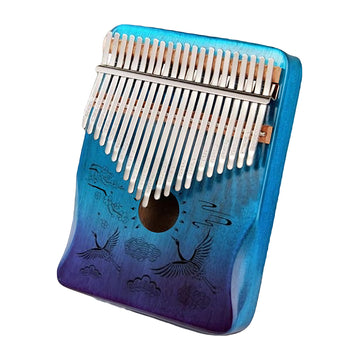
The kalimba is very affordable
Why play the thumb piano? Here’s a better question: why miss out, considering how little it can cost? If you want to learn an instrument like guitar, piano, or violin, you may need to spend several hundred, or even several thousand, euros. That’s a fact.
With the kalimba, it’s very different. If you’re on a tight budget, you can find instruments you’ll genuinely enjoy for under €30. And if you have more to spend, you can treat yourself to a high-end model or one crafted from a more luxurious wood. In short, the kalimba is within reach for most budgets, which is yet another excellent reason to give it a try.
If you’re not sure how much to spend on your kalimba, take a look at our comparison chart to see what instrument you can get based on your budget. You’ll get a clear idea of the type and quality of thumb piano you can expect.

Treat yourself to a moment of relaxation with the thumb piano
The kalimba is one of those instruments often described as a “zen” instrument. Thanks to its soft, gentle tones, it’s very easy to relax and unwind by playing for just a few minutes. Listening to music can reduce stress and lift your mood, and many serious studies have shown this again and again.
Playing the kalimba fits perfectly into that approach and can help you decompress after a long day. What’s more, some musicians use it during yoga sessions to encourage a contemplative state or make meditation easier—something far less practical with a guitar. A lot of that comes down to the kalimba’s uniquely soothing sound.
Connect with African culture through the mbira
The mbira is generally the name given to the ancestor of the kalimba. In fact, the thumb piano is far from a modern instrument. Its earliest archaeological traces date back more than 3,000 years. The Shona people of the Zambezi Valley used it—and still use it—in religious and festive ceremonies, and also to connect with ancestors and spirits.
It wasn’t until the 1950s that ethnomusicologist Hugh Tracey introduced a version of the instrument compatible with Western music, naming it the kalimba—kalimba being one of many traditional African names used for this instrument. The kalimba is therefore an instrument with undeniable African origins, and playing one lets you connect with this rich culture by reproducing sounds that have resonated in this part of the world for millennia.
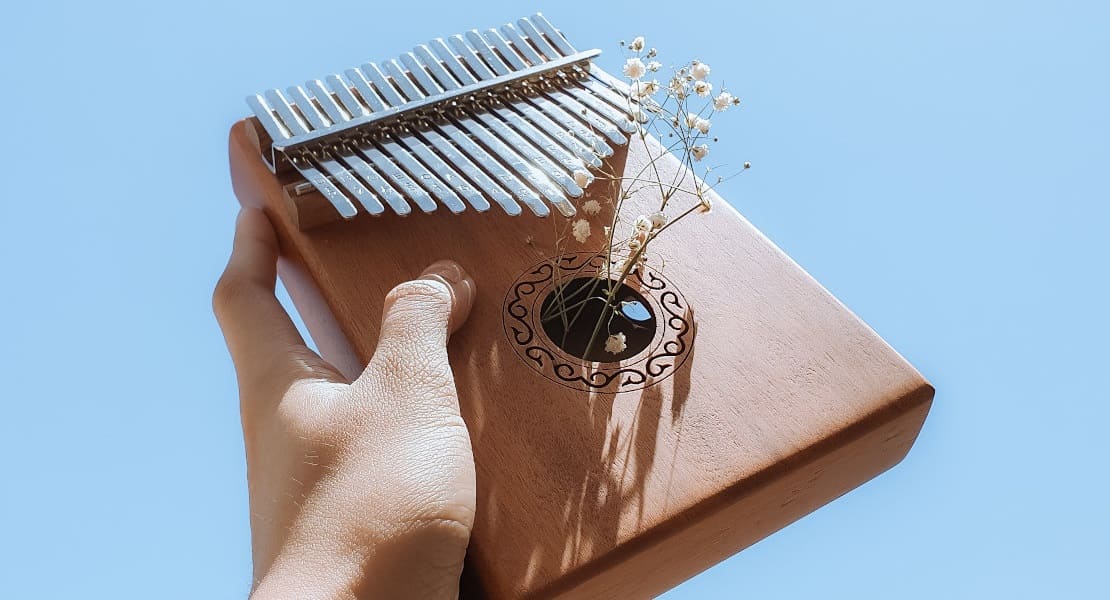
The kalimba in music therapy
Music therapy is the clinical use of music and instruments as part of a care approach. It is practiced by healthcare professionals called music therapists and supervised by the Music Therapy Federation. After completing specialized training and following a code of ethics, these professionals use sound in all its forms for care, counseling, support, and rehabilitation. They also use their skills in the fields of psychiatry and psychotherapy.
The kalimba is particularly appreciated in music therapy. Its easy playability, accessible to everyone, its small size, and its soothing sound make it an essential and remarkably effective tool. All of this reinforces the idea that playing the thumb piano can be a real asset for anyone looking to improve mood and sleep, reduce anxiety, and help relieve pain.
Try the kalimba today and enjoy all its benefits!
There are many strong reasons that show the kalimba is an enjoyable instrument to play, with plenty of benefits. Now that you know all the advantages of this little-known instrument, you can decide whether it’s right for you and whether you’d like to get one to enjoy those benefits.
That said, the kalimba isn’t the kind of instrument you’ll find in every music store. It’s more of an exotic instrument and still fairly rare in Europe. To help you choose the kalimba that suits you best, the Instruments du Monde store offers more than 200 different thumb pianos at attractive prices.
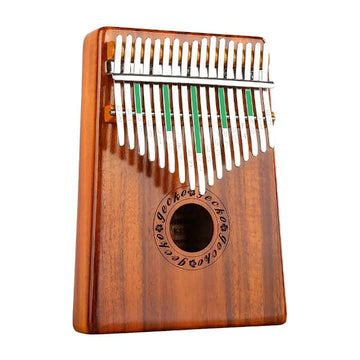
Find your kalimba right away from our large collection by clicking on the photo below:
Now that you know about the benefits and advantages of the kalimba, did you know that this instrument is over 3,000 years old? Discover the surprising origins of the thumb piano by reading our other article, which details all the archaeological and historical findings related to the kalimba.


