



Written by Ambre Montespan on Mar 14, 2023 · Updated on Sep 25, 2026

Table of contents:
Thinking about buying a kalimba, that small African-inspired instrument, but you're new to it and not sure which one to choose? How many tines should your thumb piano have to start with? Wood or acrylic? With or without a sound box? Which kalimba should you buy to get started?
Having played the kalimba for over 10 years now, I’ve had the chance to guide hundreds of beginners and get to know a wide range of models on the market. I can help you avoid common mistakes when choosing your very first kalimba.
To get started on the kalimba, it’s best to choose a mahogany instrument with a sound box, between 10 and 17 tines, plus a few accessories. However, this recommendation should be adapted to the age and musical experience of the future player.
Once you have read this entire article, you will be able to select the kalimba that best suits you by considering the following criteria:
- The number of tines
- The material of the instrument
- Accessories useful for beginners
- Whether or not it has a sound box
- The brand of kalimba
- Your ideal budget
You can easily tailor these criteria to your own situation or to the person you wish to give it to, so you can start learning this wonderful African instrument with confidence.
Now let’s look at which thumb piano is right for you.
What is the best kalimba?
Let’s get straight to the question beginners often ask: which is the best kalimba? To be completely honest, there’s no one-size-fits-all answer. In fact, it depends on a dozen or so factors, all of which we’ll cover in this article. Depending on your expectations, musical background, and budget, the “best” choice can vary a lot from one musician to another. What’s perfect for one person may not suit another. So be wary of anyone who recommends just one single thumb piano for everyone! Instead, focus on finding the instrument that fits you.
What is the ideal number of tines for a beginner kalimba?
The number of tines, or keys, is the main factor every beginner should consider before purchasing a kalimba. Too few tines can feel limiting, while too many make the thumb piano much more challenging to learn, which can discourage new players.

Kalimbas with 15 tines or less are best for beginners
Let’s get straight to the point. Choosing a 15-tine kalimba to get started is generally a great option. Very often, beginners feel more comfortable with an instrument with around ten tines, which they’ll find simpler and more accessible.
On the other hand, anything with fewer than 10 tines is more of a pocket kalimba or a model for children. An adult who plays regularly will tend to quickly reach the instrument’s limits and want to explore a wider musical range.
If you’re buying for a child, we invite you to read our other article that details the minimum age for starting kalimba, plus targeted advice for selecting this instrument for young children and teenagers.
Therefore, a kalimba with between 10 and 15 tines is still a good idea. However, this is not necessarily the best option, and we will explain why right away.
A 17-key kalimba for beginners
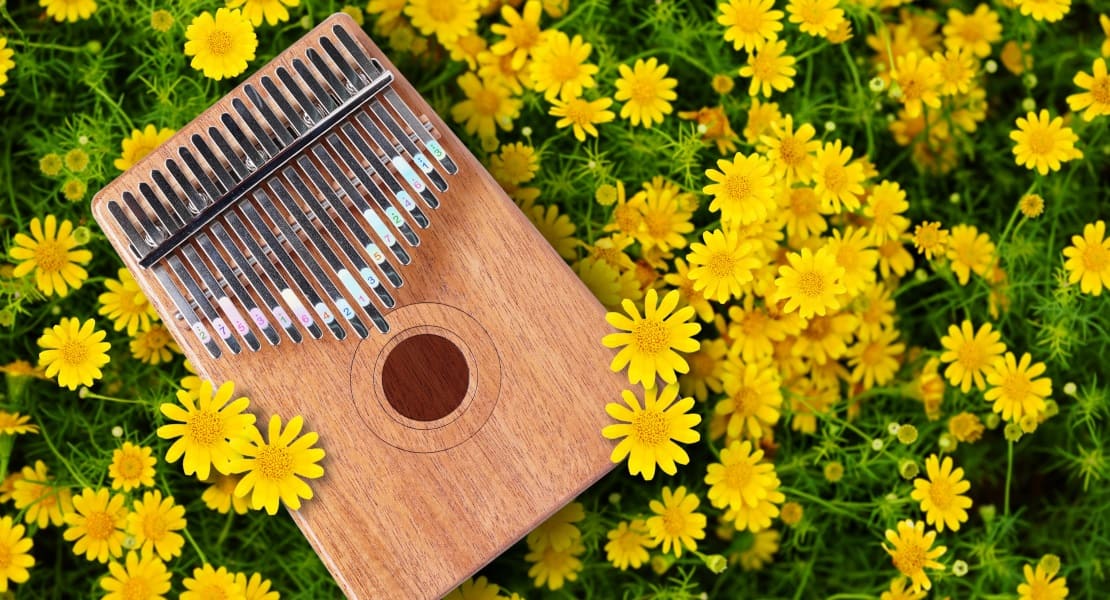
A 17-key thumb piano is also another good choice for beginners. At first glance, the number of keys can be intimidating for novices. It’s easy to get lost among the tines and hit a note you didn’t mean to.
But there is a compelling argument for beginners to own a 17-key kalimba, also known as a mbira or sanza. For several years now, the standard for thumb pianos has clearly been the 17-key model. In other words, it’s the best-selling format and the most common among kalimba players. As a result, if you’re looking for help, a tutorial or thumb piano sheet music to learn a song will be much easier to find for 17-tine models.
What’s more, you can easily limit yourself to playing only the 10 longest keys on your kalimba, which feels a lot like having a 10-key instrument. In short, if you’re a beginner who feels ready to commit and learn beautiful melodies, a 17-key kalimba could be perfect. Otherwise, choosing fewer keys can be a smarter starting point.
Is a 21-note mbira ideal for beginners?
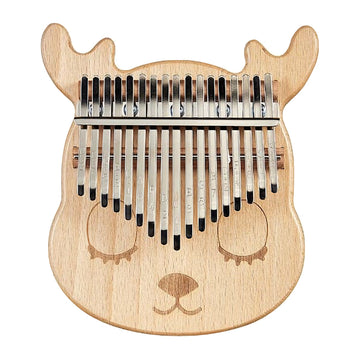
In theory, it might seem that 4 more keys than a 17-note kalimba shouldn’t be much harder. However, we don’t recommend this option for beginners. The 4 additional keys are added in the middle of the tine layout, which completely changes the pattern compared to a 17-note instrument.
You will therefore have a more complex kalimba and will no longer be able to rely on the sheet music and tutorials designed for 17-note thumb pianos. Consequently, 21-note mbiras are only recommended for beginners who already have a solid musical background with another instrument, know music theory and can read standard notation, or are highly motivated to learn the kalimba.
If you’re still weighing up a 17- or 21-note thumb piano, take a look at this comparison to help you find the ideal instrument for you.
Is it a good idea to start with a thumb piano with more than 21 keys?
If you've read our previous paragraph on 21-tine sanzas, you already know the answer. There are thumb pianos with a chromatic range of 24, 34, and even 42 tines. These instruments are clearly reserved for accomplished players and should not be chosen for beginners.
The very high number of keys, often arranged in two rows, makes the kalimba extremely complex, which means it’s not an instrument for everyone—beginners are likely to give up after just a few hours because of the difficulty.

What material should you choose for your thumb piano when starting to learn?
You may have noticed that there are two main types of thumb piano: those that are traditionally made of wood and more contemporary models made of a transparent material such as acrylic. It’s best to consider these two materials one after the other when choosing an instrument as a beginner.
Start playing the kalimba with a wooden instrument
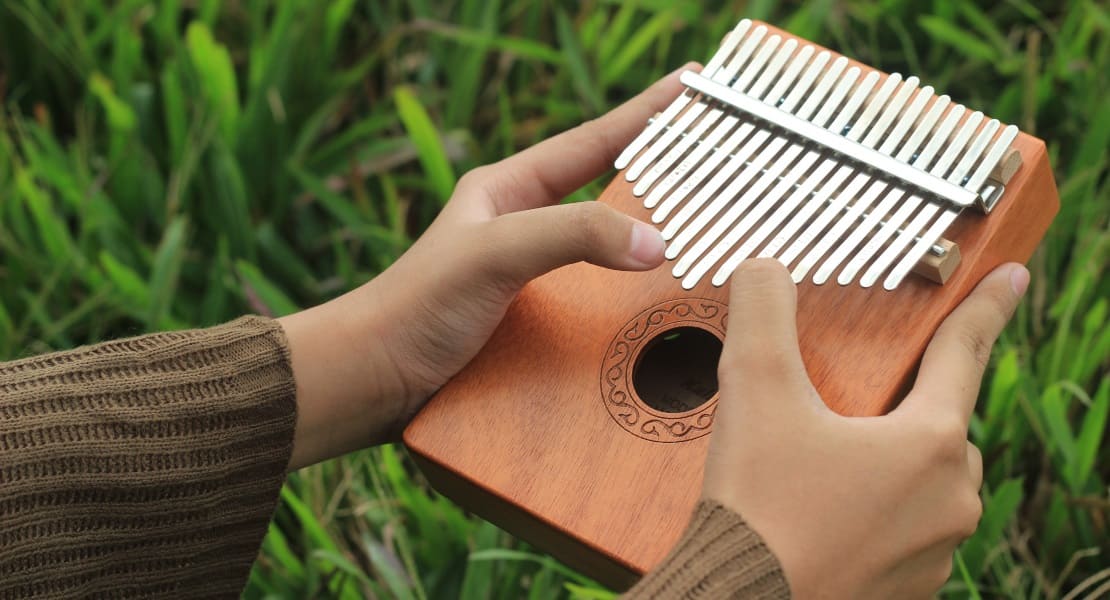
The wooden kalimba represents tradition. It’s the instrument that most closely resembles those once made by the African peoples of the Zambezi Valley. Wood is generally recommended for beginners because it’s lighter and easier to carry than acrylic, which is the only other option.
The next question is which wood to choose. There are many different types of wood used to make kalimbas. With mahogany, walnut, acacia, padauk, and pine to choose from, it can sometimes be difficult to know which one to go for. Mahogany is often recommended for beginners because it’s a soft, fairly light, affordable wood that produces very mellow tones—ideal for a thumb piano.
If you want to explore the subject further, we suggest consulting the guide to choosing kalimba wood. After reading it, you will understand the advantages of each type of wood used in the construction of mbiras.
Is acrylic a good choice for beginners?
If you’ve ever seen kalimbas with an almost transparent backing, they’re made from a plastic polymer called acrylic glass, also known as polymethyl methacrylate or PMMA. This material offers an innovative design that gives the traditional kalimba a modern twist.
For beginners, however, an acrylic instrument has two disadvantages. The first is that it is usually more expensive than its wooden counterpart. The second is that it is also heavier. This may seem like a minor detail, but after playing for several minutes, those extra grams can quickly put strain on your wrists and forearms.
If the look of the thumb piano isn’t important to you, choose a lighter wood model. On the other hand, if you fall in love with an acrylic kalimba, don't force yourself to choose a wooden one. It's better to have an instrument you genuinely enjoy playing than one you find less appealing and end up leaving in a corner.
For more information, check out our comparison between wooden and acrylic kalimbas. It will certainly help you see things more clearly.

Should you buy accessories to get started with the mbira?
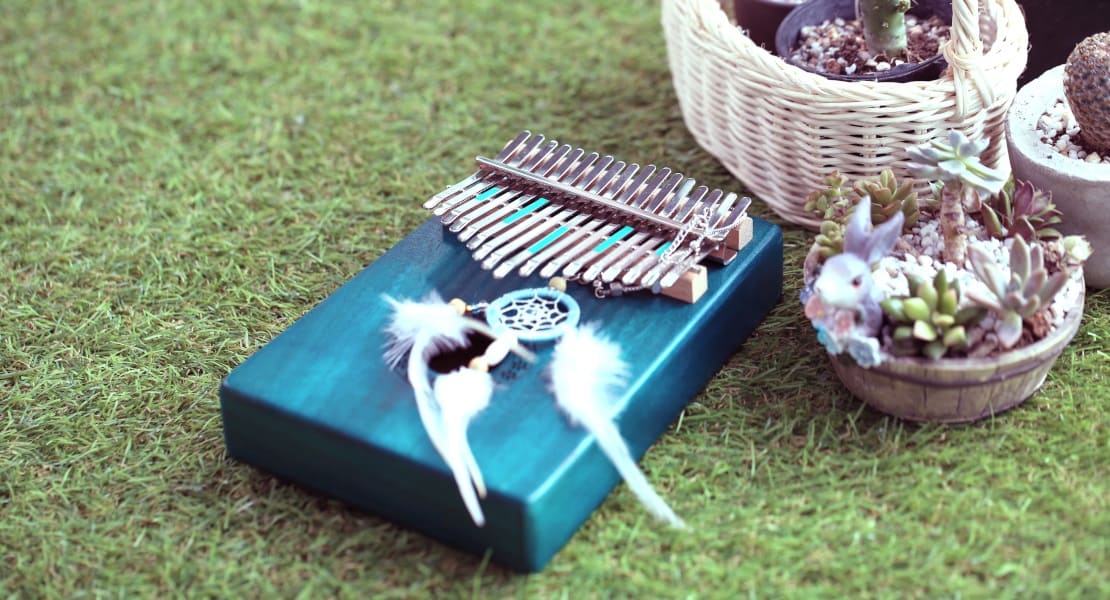
When buying a kalimba, it is highly recommended that beginners do not purchase a "bare" instrument, but rather one that comes with accessories. While some of these accessories are not very useful and are more for aesthetic purposes, such as decorative tassels, others are clearly intended for new players.
For example, a tuning hammer is essential so you can always play in tune on your kalimba. Stickers are also invaluable for beginners, who can place them on the steel keys to navigate the tines more easily. Therefore, we recommend, where possible, choosing a pack containing the desired instrument and at least these two accessories. An instruction booklet and/or sheet music is also a significant bonus.
Should you start playing the finger piano with or without a sound box?
If you’ve browsed the various finger piano models, you’ll see they come in two designs. The first type features kalimbas without a sound box, consisting of a simple wooden board often called a “flat.” The second type includes those with a sound box, where the body is hollow to amplify the vibrations. These are called “hollow” kalimbas.
To get started, it is generally advisable to focus on kalimbas with a sound box. The main advantage is that they are often lighter than those with a solid body. For exactly the same reason as above, it’s recommended to choose a wooden kalimba rather than an acrylic one when weight matters. A kalimba with a sound box will be more enjoyable for beginners to thumb piano.
In addition, you can create unique sound effects with this type of kalimba, something that’s impossible with a flat thumb piano. These techniques are not really intended for beginners, but once you have gained experience, you will be glad to have this option. To explore this topic further, take a look look at the advantages and disadvantages of kalimbas with and without a sound box. You will then know exactly which type of instrument is best for you.

Which brand should you choose to start learning the sanza?
There are several well-known kalimba brands, such as Gecko, Lingting, and Hluru, which offer high-end instruments. It doesn't make sense to choose one of these brands for your first kalimba. The reason is simple: the price. You can find thumb pianos for half, or even a third, of the cost that are perfect for beginners learning to play this musical instrument. Until you are sure that you like the kalimba and will spend long hours playing it, it is better to opt for unbranded beginner packs that have proven themselves with a significant number of positive reviews from other players.
It would be a shame to spend two or three times more money on a kalimba that will just sit in a closet gathering dust. Speaking of price, that's the next part of our article.
How much should you budget for a beginner's kalimba?
For a reasonable budget when buying a kalimba for beginners, we recommend not spending more than €50. You'll easily find ones for around €30–€40 that will do the job perfectly. Below €20, you'll find instruments that may not necessarily be of the highest quality.

If you have a larger budget, you could consider choosing a black walnut mbira with attractive grain. Or you could choose a kalimba with more decorative accessories or equipped with a jack plug so you can record your performances or connect it to a speaker. But this is beyond the scope of a sanza for beginners and is more about treating yourself to a high-end instrument.
Discover the kalimba with an instrument designed for beginners
Choosing your very first kalimba is not really an easy task given the multitude of options available on the market. Beginners are often overwhelmed and may end up disappointed if they’re steered in the wrong direction. Now, armed with the right criteria, you can confidently choose a kalimba that matches your needs or make a thoughtful gift for someone else.
There are still many kalimbas that are suitable for beginners, and you may be unsure about which one is right for you. To answer these questions, the Instruments du Monde store offers a kalimba designed for beginners that is excellent value for money.
Get this kalimba now by clicking on the image below:

Now you know how to choose a kalimba for beginners. However, do you know how much you want to spend? If you’re unsure, we recommend reading our guide to learn the price of a good kalimba. After reading it, you’ll have a solid idea of how much to invest in this musical instrument. And to learn everything there is to know about the mbira, be sure to read our dedicated guide.


