



Written by Ambre Montespan - Updated on May 8, 2026
Table of contents:
Thinking about buying a Tibetan singing bowl, or already own one but wondering whether there are any contraindications to using this musical instrument known for its many benefits? Can a singing bowl cause side effects or be harmful to your health? Is regular use not recommended for people with certain illnesses or conditions?
Tibetan singing bowls are fascinating objects that I have been studying in detail for over 5 years. I have read almost all the scientific studies on the subject and can therefore provide you with a clear summary of the various contraindications and side effects that may be associated with this instrument.
Although Tibetan singing bowls are generally harmless, it’s still smart to take a few precautions—especially regarding the sounds and vibrations they produce, as well as the materials they’re made from.
By the end of this article, you will know:
- Whether Tibetan bowls are really dangerous
- The contraindications to be observed when using this instrument
- Whether there are any side effects
As a result, you’ll be able to decide whether using a Tibetan singing bowl is safe for you, based on your personal situation and state of health.
Let’s dive right into the potential downsides of this Asian-origin musical instrument.
Are singing bowls dangerous?
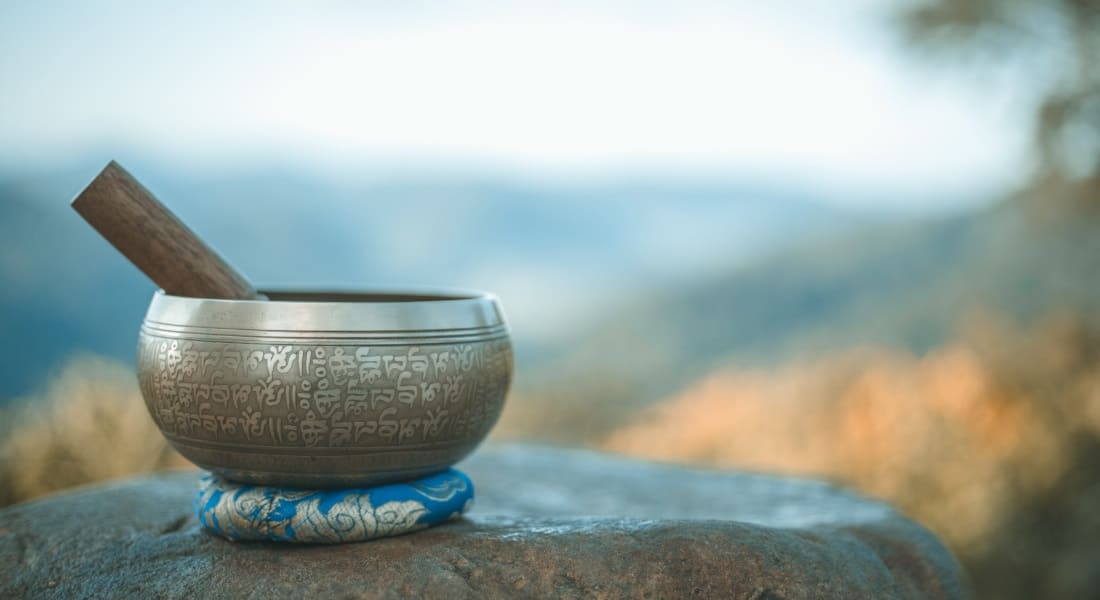
Overall, Tibetan bowls appear to be relatively harmless. Strictly speaking, they are simply bowl-shaped objects made of an alloy of different metals. They’re considered musical instruments and closely resemble Western bells, just inverted. And yet, no one really wonders whether bells are dangerous. What’s more, Tibetan bowls are freely available for sale, which suggests health authorities have little to criticize about them as such, even if we’ll see in a moment that there are a few contraindications to keep in mind. In short, singing bowls do not appear to be dangerous.
On the other hand, what can be harmful and risky is the belief some people have that Tibetan bowls can heal. This is particularly true when their therapeutic potential is overstated. In fact, there is no scientific evidence validating the claim that singing bowls can cure serious conditions such as cancer or Alzheimer’s disease. Still, it’s not uncommon to meet desperate individuals who put their hopes in this object for healing. The point here isn’t to discourage you if you’re in that situation, but to be honest with you and, above all, to help you avoid the trap set by certain unscrupulous sellers who promise results that simply aren’t there.
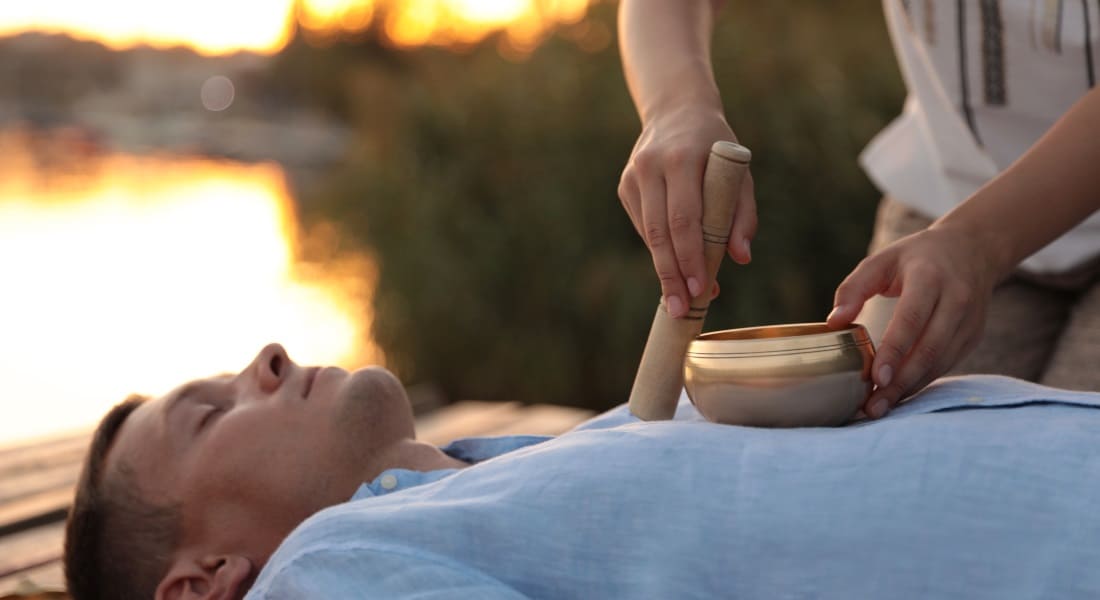
That said, this doesn’t mean Tibetan bowls are useless from a therapeutic perspective. Check out this other article that details all the benefits of singing bowls. You’ll learn which benefits are genuinely associated with this instrument and better protect yourself from people or companies that promise the impossible. You’ll see that Tibetan singing bowls can be a wonderful support when you’re going through difficult moments in life.
What are the contraindications associated with Tibetan singing bowls?
Currently, there are no serious scientific studies specifically focused on the contraindications of singing bowls. Still, if you look closely at a Tibetan bowl, it’s an object that produces sound and vibrations and is made from a specific alloy. Based on these three factors, it’s possible to outline a set of logical contraindications. On a more metaphysical or abstract level, it may also have a negative influence on the chakras.
It’s worth noting that this advice is general in nature, so be sure to consult a healthcare professional if you have concerns about using Tibetan bowls with a specific condition.
Can the sound produced by the musical instrument be harmful?
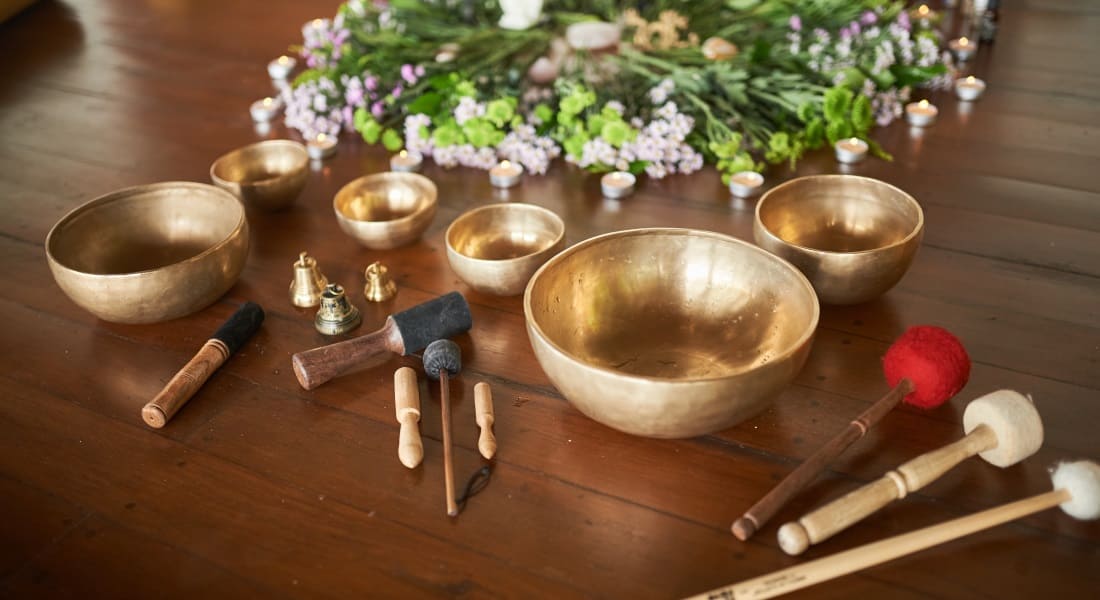
Like all musical instruments, Tibetan bowls produce sound. Therefore, it’s wise to protect yourself if you own a particularly large bowl capable of generating high sound levels, or if you already have hearing-related health concerns. For example, a large Tibetan bowl can produce sound above 80 decibels—similar to a car engine—which is not insignificant. In reality, this precaution applies to all instruments. There’s a reason concert musicians wear hearing protection.
Because Tibetan bowls can produce a particularly high-pitched sound, it’s important to use them mindfully, taking into account the size of the instrument and the force with which you strike it, to avoid damaging your hearing. This is especially important during sound massages, when the bowls may be placed close to the ears. If you experience migraines after using this instrument, it’s very likely you don’t tolerate the volume or frequency, and you simply need to play more gently.


Is the material used to make singing bowls harmful?
According to Tibetan tradition, singing bowls are made from an alloy of seven metals: gold, copper, silver, lead, tin, iron, and mercury. We review the details of all these metals in our article on the composition and meaning of Tibetan seven-metal bowls. Whenever lead or mercury are present in an object, there’s no question it can be a source of problems. It has been known for many years that it is possible to be poisoned by lead, as well as by mercury.
However, if you’ve just read the article mentioned above on the composition of this instrument, you’ll know that metal singing bowls are made almost exclusively from copper and tin, which account for more than 99% of their composition. The other metals, when they are actually present (which isn’t always the case), are found in minute quantities. To my knowledge, there has never been a case of mercury or lead poisoning from using a Tibetan singing bowl, even though this object has been on the Western market for over 50 years. However, we will see shortly that there are alternatives to Tibetan bowls made of seven metals.

The other five metals, notably copper and tin, are present in significant quantities. While gold and silver are generally considered hypoallergenic, it’s still possible to have an allergic reaction to the other metals. As a result, if you already know you’re allergic to one of the metals in the bowl’s alloy, it’s clearly contraindicated to use it. If you notice redness on your hands or elsewhere on your body after direct contact with the instrument, there’s a good chance you’re reacting to one of these metals, and you should stop using it.
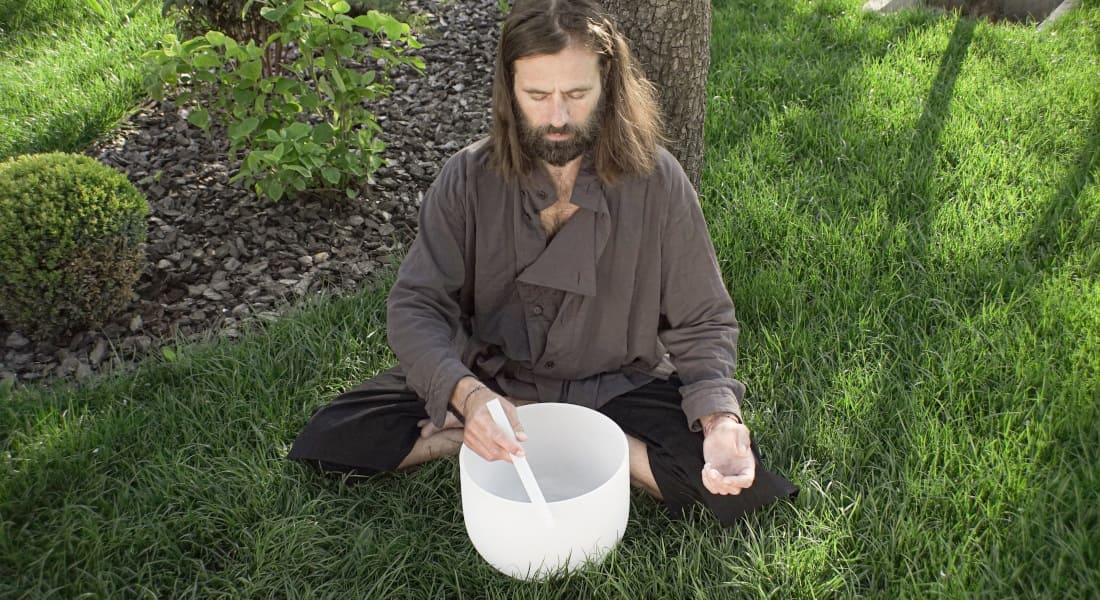
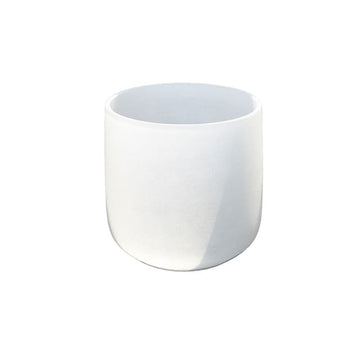
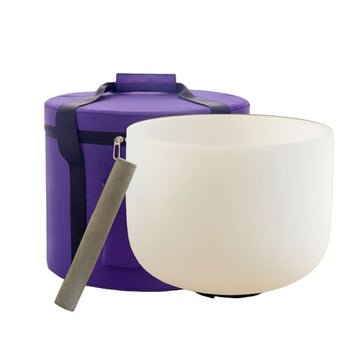
If the presence of lead and mercury in Tibetan singing bowls made of seven metals bothers you, even slightly, it’s wise to explore an alternative. After all, you’ll never fully relax and enjoy the many benefits of this instrument if a negative thought keeps lingering in your mind. So you have two options. The first is to choose a singing bowl still made of metal but only bronze, which contains only copper and tin. The second is to select a Tibetan quartz crystal bowl, which, in addition to its unique charm, poses no toxicity issues.
Why might the vibrations of Tibetan singing bowls be inadvisable?
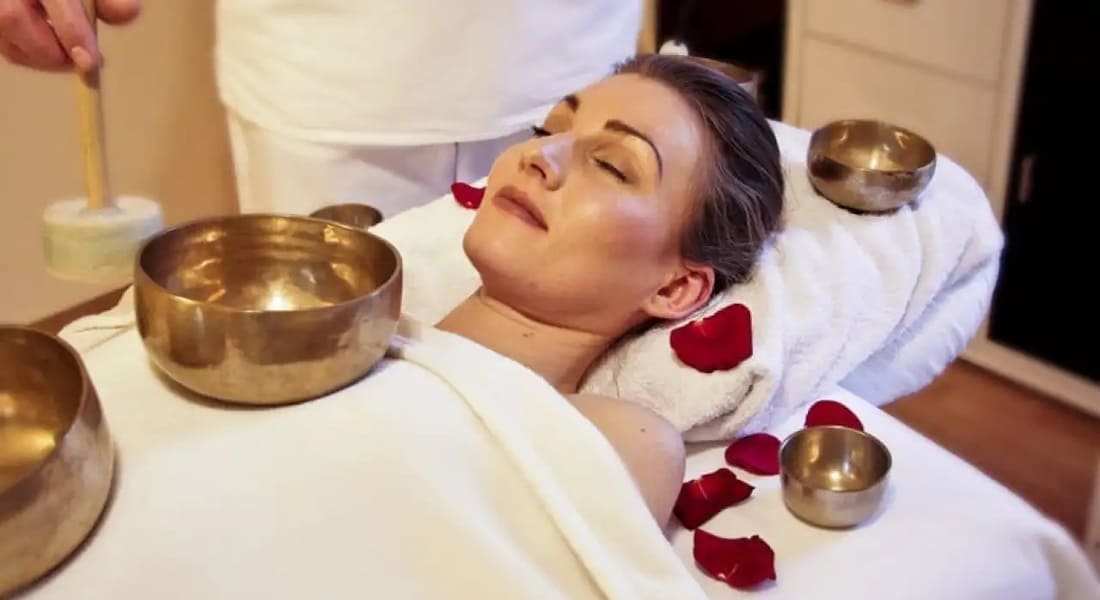
The last physical element for which contraindications may be raised concerns the vibrations generated by singing bowls. Here, we are referring to vibrations when the instrument comes into contact with a person’s body (sound-related vibrations were already discussed above). If you have never experienced a sound massage, you should know that these vibrations are far from subtle when large Tibetan bowls are used. So the question of a possible risk associated with these vibrations is a legitimate one.
It turns out that vibrations have been used for therapeutic purposes since the 19th century, and more specifically since 1867 by Russian physician Gustav Zander. Since then, studies have examined the risks and contraindications associated with vibrotherapy. These studies suggest that this practice can be dangerous if the intensity of the vibrations is too high, especially around the back. Fortunately, Tibetan bowls do not produce vibrations strong enough to cause serious damage. However, if you already have back pain, a sound massage with these singing bowls should be performed with caution. With the right amount of pressure, it can be effective, whereas too much force could become counterproductive.
Are there any contraindications to sound massage with Tibetan bowls?
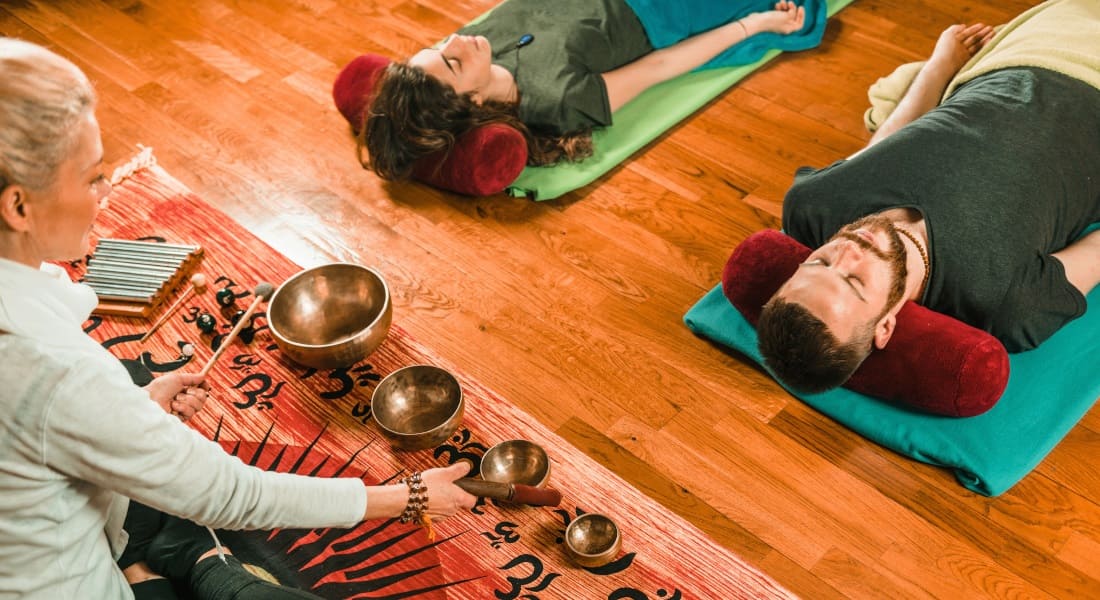
As we’ve just mentioned, caution should be exercised in cases of back pain. In addition, singing bowl vibration therapy may not be recommended in the following cases:
- You are pregnant
- You are currently taking medication to thin your blood
- You have heart disease
- You have advanced diabetes
For women who are expecting a child, this is more of a precautionary measure, as science does not yet know what effects this type of therapy could have on the fetus, even though some expectant mothers do sound massages during their pregnancy. If you fall into any of these categories, we recommend consulting your healthcare provider before beginning this practice. However, if you plan to use your Tibetan bowl solely to enjoy the sound without direct body contact, you can disregard these cautions.
In addition, in rare cases, people with epilepsy have experienced seizures that may be related to the combination of sound and vibrations caused by the singing bowl. Therefore, this instrument is contraindicated if you are in this situation.
You may also see claims that people with neurological conditions such as Parkinson’s disease, children, or individuals with a pacemaker or brain stimulator should never use a Tibetan bowl. This information is generally unfounded, and you should speak with a doctor who can advise you based on your specific situation. This is especially true given that a 2009 study by the University of Waterloo in Canada entitled “Short-term effects of vibration therapy on motor impairments in Parkinson’s disease” suggests that vibration therapy may have a beneficial short-term effect on tremors and muscle stiffness. The long-term effects require further research.
Can using a Tibetan singing bowl block your chakras?
At present, there is no scientific evidence to prove that chakras, the energy centers located throughout our bodies, exist. However, many people swear they can sense them, so if you’re open to the concept, it’s useful to understand the potential risks of using a Tibetan singing bowl in that context. If not, feel free to move on to the next section.
The ultimate goal for anyone working with chakras is to harmonize them and, above all, to avoid a blocked root, throat, or sacral chakra. It’s important to know that Tibetan bowls can help you balance all your chakras, but you still need to know how to do it. In fact, the seven musical notes C, D, E, F, G, A, and B each correspond to one of the seven major chakras in the human body. So if you use a singing bowl without knowing what you’re doing, you can create an even greater imbalance than before and block one or more chakras.
The choice of your instrument will therefore be essential, particularly with regard to the musical note it will emit. The good news is that we have already created guides to help you with this decision. If you want to know which note to choose for your Tibetan bowl depending on the chakra you want to work on, check out this article. If you already own a singing bowl, refer to this guide to find out what note it produces. You will then have all the information you need to avoid blocking your chakras and work on them in a precise and localized manner.
Are there any side effects to using a Tibetan singing bowl?
There are no known side effects associated with the normal use of Tibetan bowls. Of course, if you strike it very hard near your ear, place the bowl on an open wound, or on skin with eczema or psoriasis, you can expect hearing loss or infection. This caution applies to any object, and it’s simply a matter of using the instrument in a logical, reasonable way. Tibetan singing bowls are far from magical or miraculous when it comes to healing.
The only point to raise would be that current research is hesitant to attribute certain benefits to either the instrument or the placebo effect. But even assuming that the latter is true, it is not really dangerous as long as you do not use the Tibetan bowl alone to treat an illness. As we stated at the beginning of this article, if you wish to use this instrument for healing purposes, you should consider it as a complement to proven medical treatment and not as a sole solution. In reality, the side effects associated with singing bowls are undeniably positive, as they have many benefits.
Put your mind at ease by purchasing a risk-free instrument
Because Tibetan bowls are thousands of years old, it’s natural that they’re shrouded in mystery. Due to their unique composition of seven metals, including lead and mercury, and the specific vibrations and sounds they produce, it’s important to consider the possible contraindications and side effects that this musical instrument could cause. Now you know the situations in which using singing bowls is not recommended, so you can decide whether this instrument is right for you or your friends.
However, we have seen that the presence of lead and mercury in the manufacture of traditional Tibetan bowls made of seven metals could potentially pose problems. That’s why Instruments du Monde invites you to relax with a quartz crystal singing bowl, which guarantees that neither of these two metals is present in the instrument you’ll be handling regularly.
Discover this fabulous quartz crystal singing bowl now by clicking on the link below:
Have you ever wondered how to determine whether the singing bowl you own or plan to buy is authentic? Find out by reading our article that will help you recognize a genuine Tibetan bowl. You will then be able to tell whether it is an original or not. Read our knowledge base on singing bowls—you’ll find it very useful.


