



Written by Ambre Montespan on Oct 26, 2026 · Updated on Nov 2, 2026

Table of contents:
Have you ever peeked through the hole at the bottom of your handpan, wondering what might be hiding inside? Would you like to know what’s really inside a handpan? Is this percussion instrument completely empty, or does it contain a mechanism that gives it its unique sound?
As a handpan player for over 10 years, I’ve had the opportunity to take a very close look inside many handpans, both in makers’ workshops and inside my own instruments. That’s why I can explain what lies between the two shells and what purpose it serves.
There is no mechanism inside a handpan. The two steel shells, bonded together along their rims, form a cavity that can produce a low note and give the artisan access to tune the notes.
By the time you finish reading this article, you’ll know:
- What’s actually inside a handpan
- The role of the air trapped between the two shells
- Whether you should clean or oil the inside of your handpan
This way, you’ll be able to explain where that deep bass sound comes from when you play. You’ll also be able to care for your instrument without risking damage to anything inside it.
Now, let’s take a look at what’s hidden beneath the shell of this instrument!

What’s inside a handpan?
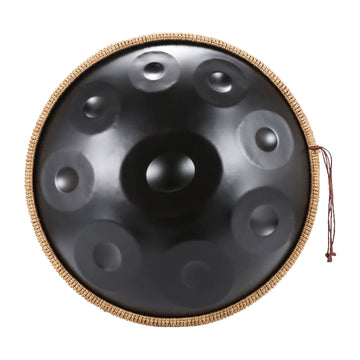
It’s important to know that the handpan consists of two steel shells bonded together along their rims. The top shell features the Ding, the central note, along with the notes arranged around it. The bottom shell is usually smooth and has an opening in the centre called the gü. On handpans with bottom notes, it features a few notes as well. Once assembled, these two shells create a large empty space between them, giving the handpan its lens-like shape. For example, the Hang by the Swiss company PANArt—the instrument that gave rise to all handpans—measures 52 cm (20.47 in) in diameter and 24 cm (9.5 in) in height. You’ll find the names of all the instrument’s visible parts in my guide to the handpan’s construction and how it works.
There is therefore no mechanism inside a handpan. You won’t find any springs, blades, batteries, or electronic circuits. In fact, the handpan is an idiophone—that is, an instrument that produces sound through the vibration of its own material. Furthermore, the sensors that some musicians use to amplify their handpans are accessories attached to the shell and purchased separately. Only electronic handpans, with their built-in batteries and speakers, contain electronics, but they are entirely different instruments, which I discuss in my article on the electronic handpan.
What can you see when you look through a handpan’s gü?
The first time I shone a torch through the gü, I was surprised to discover the hidden side of the notes. Some makers mark the locations of the notes on the inside of the shell before shaping them with a hammer. As a result, you may see markings or pencil lines left by the artisan who crafted your percussion instrument. As for the rim of the gü, it isn’t simply cut out: the metal is folded inwards, then filed and curved with a hammer to prevent injury to the hand supporting the instrument, since many players handle their handpan by gripping it through the gü opening.
On first-generation Hangs, the creators attached a white label visible through the gü featuring the serial number, model name, and signature of Felix Rohner or Sabina Schärer, the instrument’s two creators. On the next generation, the serial number was engraved on the inner rim of the gü. Starting in 2008, all this information was moved to the outside of the shell.
How are the two shells of this musical instrument assembled?
As for the joint between the two shells, PANArt glued them together, then added a brass ring one or two days later to protect the rim. Today, most artisans use a strong adhesive and place numerous clamps around the instrument to apply even pressure across the entire rim. After allowing the adhesive to set, they install a rubber rim, which helps protect the instrument if it is dropped. You’ll find every step leading up to this assembly in my article on how a handpan is made.
What does the air trapped inside this percussion instrument do?
The presence of this cavity stems from the instrument’s history. The Hang was born when a percussionist showed PANArt a ghatam, an Indian terracotta pot, and dreamed of hearing the sound of their steel resonate inside a body played with the hands. The air trapped between the two shells therefore forms a resonating chamber. Together with the gü, it acts as a Helmholtz resonator. When you strike the Ding, the air can vibrate through the opening and produce a very low note that complements the notes of the steel. Physicists Thomas Rossing and Andrew Morrison, who conducted several studies on PANArt’s instrument, including an article published in Physics Today in 2009, showed that the central note is strongly coupled with this air resonance.
Generally, this gü bass note falls between approximately 65 and 98 hertz, lower than most of the instrument’s notes. In practice, it depends on the size of the shell and the shape of the gü. For example, it can vary from approximately 60 to 85 hertz for instruments from the same maker, depending on how much space the musician leaves open beneath the instrument. The more you close off the gü, the lower the note becomes. PANArt even built the second generation of its instrument around this note. Its creators described it as a kind of acoustic cathedral: the air resonance became the instrument’s fundamental note, and the Ding was tuned an octave higher.
When your instrument’s gü brings out this resonance clearly, you can play this air note. To do so, place the heel of your hand—the fleshy part near your wrist—on the dome of the Ding, then let it drop gently and bounce without striking hard. If you’re seated with the handpan on your lap, spread your legs apart or bring them closer together. This will open or close the gü to varying degrees, causing the bass note to rise or fall. You can see this technique in the video below:
Why does the artisan reach through the gü to tune the Hang drum?
The gü isn’t just for letting sound out. It also gives the artisan access to the inner surfaces of the notes without having to separate the two shells. Once the handpan is glued together, the metal continues to shift slightly. Even today, some makers tune the notes two or three times before gluing the shells together, then several more times after the adhesive has dried until the tuning remains stable. For these final adjustments, the artisan uses a special tuning hammer inserted through the gü to work on the notes of the upper shell from below. This is also how your handpan can be retuned if a fall, impact, or years of playing eventually cause it to go out of tune. I strongly advise against trying this yourself, as a single misplaced hammer strike can make the problem worse. To learn when and how to have your instrument retuned, read my guide to tuning a handpan.
Should you clean or oil the inside of this flying saucer-shaped musical instrument?
Keep in mind that the inside of your handpan requires very little attention. Unlike the top of the instrument, it isn’t touched by your hands or exposed to sweat. Cleaning it once in a while is therefore enough, and only if you see a need for it. To clean it, reach through the gü opening with a soft cloth lightly dampened with 70% isopropyl alcohol. Just be sure not to touch the joint between the two shells, as both alcohol and oil could weaken the adhesive. However, remember to regularly wipe the rim of the gü, which your fingers touch whenever you carry the instrument. As for oil, never oil the inside of your handpan. The steel needs to vibrate freely, and a layer of oil will eventually muffle the notes. For the top of the instrument, however, follow my handpan maintenance guide.
Choose a handpan that’s easy to maintain!
As you’ve seen, the inside of this percussion instrument contains no mechanism: just two steel shells, an adhesive joint, and plenty of air. After reading this article, you also know why this cavity can give the gü its bass note, how the artisan uses it to tune the notes, and why it should be cleaned but never oiled.
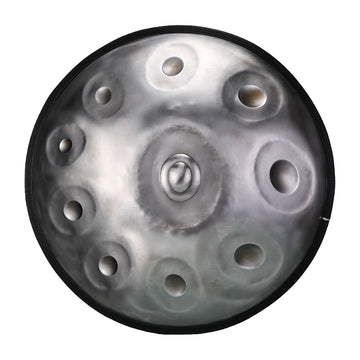
However, it’s fair to say that regularly maintaining the top of the instrument remains a hassle for many musicians, especially when they play often. That’s why I personally recommend the Instruments du Monde store, which sells handpans made from several materials. For example, you can choose this stainless steel handpan, which offers extraordinary acoustics and requires very little maintenance.
Discover this handpan now by clicking the image below:
Now that you’ve considered these tips, do you know the difference between a Hang drum and a handpan? Discover the answer in this fascinating article exploring the historical roots of this musical instrument. And to uncover all the secrets of the handpan, read my complete guide.


