



Written by Ambre Montespan - Updated on Sep 25, 2026

Table of contents:
Do you own a Tibetan singing bowl, or are you planning to buy one soon? Are you wondering whether you should also get a cushion as an accessory for this Asian percussion instrument? And is the stand you already have for your singing bowl actually suitable?
Having used Tibetan singing bowls for their virtues and benefits for over 10 years, I’ve had the opportunity to test every type of cushion available on the market. So I’m in a great position to explain what this accessory is for and how to choose the right one.
If you’re not holding the bowl directly in your hand, it needs a cushion—or at least a stand—to stay stable and produce clearer, richer tones without unwanted noise.
By reading this article, you will learn:
- Why using a cushion is recommended for a singing bowl
- The different types of stands suitable for this musical instrument
- Which cushion is best for your Tibetan singing bowl
This will enable you to get the best possible sound from this musical instrument while finding the stand that’s perfectly suited to both the bowl and your needs.
Now, let’s dive into this fascinating topic together.
Why should you use a cushion with your Tibetan singing bowl?
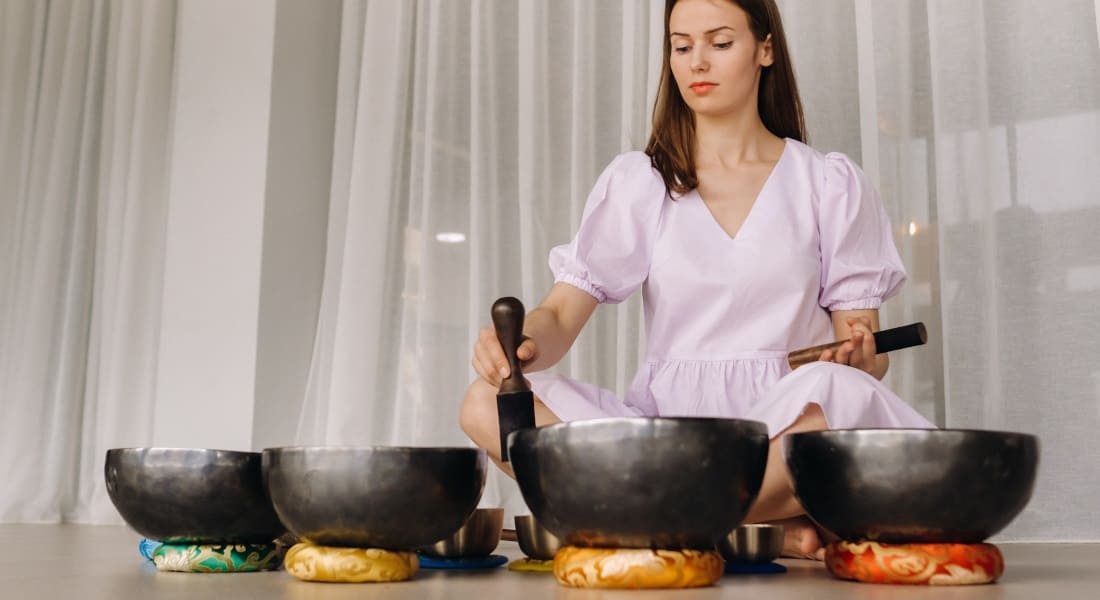
There are several good reasons why most Tibetan singing bowls are usually supplied with a cushion. In fact, this accessory is almost indispensable for most uses. The only exception is if you play it by placing it directly in the palm of your hand to make it sing or ring. However, this approach has drawbacks. If you’re trying to relax or meditate while enjoying the sound and vibrations, your muscle tone and focus will naturally soften. That means there’s a strong chance the bowl could slip from your hand and hit the floor, potentially damaging, cracking, or deforming it. Plus, if you own multiple bowls, or if yours is particularly heavy, using a support becomes a must. That’s why many players rely on a cushion or mat to hold their Tibetan singing bowl.
You might wonder why you can’t simply set the instrument on the floor. In theory, you can, but it’s clearly not recommended. When you play a singing bowl on a hard surface, the vibrations from the mallet or striker can make it slide around, which isn’t very practical. From a safety standpoint, it can also fall if it’s placed on a table. But above all, the sound produced by the Tibetan bowl won’t develop optimally. Unwanted noises can appear, especially because the bowl is vibrating directly against a hard surface. Those noises aren’t pleasant, and they can get in the way when your goal is to relax.
That’s why using a support—like a cushion or mat—that absorbs the singing bowl’s vibrations while keeping it in place is strongly recommended, and even essential depending on the situation. It also helps you focus more easily when you’re aiming for a meditative or contemplative state.
What are the different types of supports for this musical instrument?
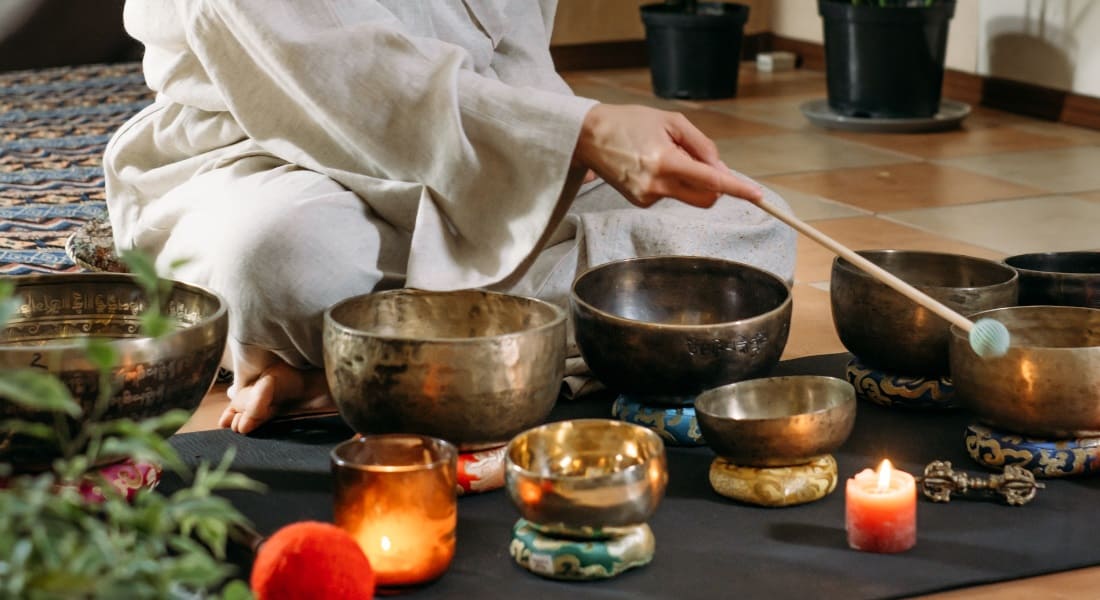
Below is a list of all the supports available for use with a Tibetan singing bowl.
Ring-shaped or donut-shaped cushion
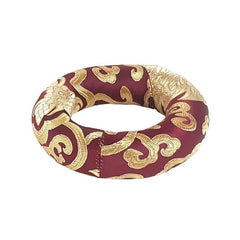
Ring- or donut-shaped cushions are padded with cotton. This is the most common style used with singing bowls. They often feature Tibetan- or Nepalese-inspired designs, and the base color can vary. Silk versions also exist, but they’re much more expensive. The singing bowl sits in the center of the cushion, so it’s important to choose the right size so it isn’t too large. As a rule of thumb, the cushion’s diameter should be about 85% of the bowl’s diameter. It should also be able to fit inside the singing bowl without being forced or misshapen.
The padded cushion for Tibetan bowls
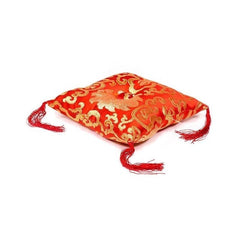
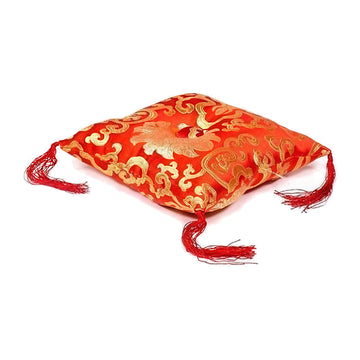
This type of cushion is very similar to the decorative pillows you might find on a living room couch, except it’s sized for Tibetan singing bowls. They often feature ornate patterns, and the bowl simply rests on top. The thickness of this kind of support is typically about 1–2 in (a few centimeters), depending on its size. Some models include decorative tassels on all four corners. Choose a cushion that’s slightly larger than your bowl’s diameter so it sits securely without wobbling. Note that this style can also be round or rectangular, and it may be made from felt instead of cotton padding.
The singing bowl mat
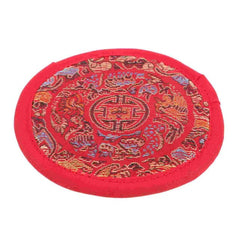
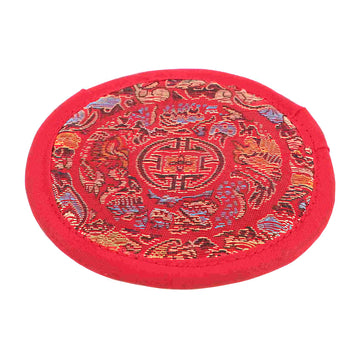
The mat is an alternative to the cushion we just discussed. Here, there’s no padding at all, or only a very thin layer. Tibetan singing bowl mats are easy to carry because they can be rolled up to take up less space. They’re often decorated with beautiful embroidery or Buddhist symbols.
The rubber ring or "O-ring"
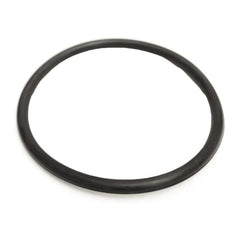
The rubber ring, also known as an "O-ring," is mainly used with quartz crystal or rock singing bowls. This very thin ring is ideal for crystal bowls because they have a flat base, unlike most traditional Tibetan metal-alloy bowls, which are rounded. With a domed metal bowl, the bottom can end up touching the hard surface through the ring, which defeats the purpose. It also means you’ll need a perfectly smooth, level surface; otherwise, the bowl may make contact with any small bumps or uneven spots.
On top of that, quartz singing bowls are often much heavier than metal ones of the same diameter. That’s why a cotton cushion isn’t recommended, because the bowl tends to compress the fabric too much. That said, you can absolutely use a rubber ring for your metal bowl and a cushion for your crystal bowl. Choose a rubber ring that measures about half the diameter of your bowl.
The singing bowl display stand
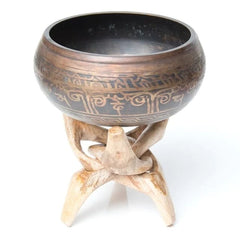
Display stands for Tibetan singing bowls are very often handmade from solid wood. They are only intended to display the instrument in the best possible conditions and should not be used while playing the bowl. Otherwise, the bowl could fall, and unwanted noises may also appear.
The suction cup for Tibetan singing bowls
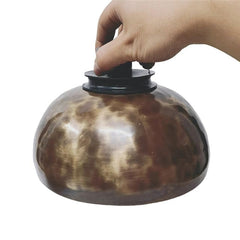
The suction cup for Tibetan bowls isn’t strictly a stand, but it’s worth mentioning here. This accessory is mainly used by professionals and therapists so they can position the bowl in any direction, especially toward the recipient’s body during a sound therapy session. The suction cup creates a secure seal on the bottom of the instrument, allowing you to lift the bowl with one hand using the handle and then play it with the other using a stick or mallet.
Should you choose a mat or a cushion for your singing bowl?
After testing all of the accessories mentioned above multiple times, my personal preference is clearly ring-shaped cushions. Compared to other supports, the tone is purer and more harmonious. Plus, the ring stores neatly inside the bowl when it’s properly sized.
Thick, square cushions muffle the instrument’s vibrations too much. However, I do find them more visually appealing for presenting or displaying a singing bowl. It’s up to you to decide whether you want to prioritize aesthetics or sound. Mats are a great option for enjoying the full richness of your Tibetan bowl’s tone. Plus, symbols like the flower of life or Hindu mantras can be embroidered on them, which can be especially appealing if you’re drawn to that style.
Rubber rings should be reserved, whenever possible, for crystal singing bowls, while display stands aren’t meant for playing at all, only for presentation. Finally, suction cups can be a real advantage, but only if you’re working on someone else. If you’re playing on your own, they’re not especially useful.

Treat yourself to the best cushion for your Tibetan singing bowl
Using a cushion with a Tibetan singing bowl is strongly recommended in most situations for this Asian percussion instrument. With so many support options out there, it’s easy to get lost and make the wrong choice. But thanks to what you’ve learned in this article, you’ll be able to pick the perfect cushion for your singing bowl with confidence.
That said, not all cushions are created equal. Choose one that’s padded enough so the bowl doesn’t “float” inside it. That way, you’ll hear the bowl’s full sonic potential. That’s why Instruments du Monde recommends this range of ring cushions designed specifically for Tibetan singing bowls. With one of them, you’ll be able to get the most out of your instrument’s acoustic capabilities.
Buy this singing bowl cushion now by clicking on the image below:
While a cushion is an important choice, it’s also essential to choose the right crystal singing bowl. Between the musical note, frequency, and even the material the instrument is made from, it’s easy to feel overwhelmed. Also read this article, which explains everything you need to know about Tibetan singing bowls.


