



Written by Ambre Montespan - Updated on Sep 25, 2026

Table of contents:
Do you own a Tibetan singing bowl, or are you planning to buy one soon, and would like to learn how to use it properly? Would you like to know how to make it vibrate and sing using the stick or mallet provided? Why can’t you get your bowl to sing?
Having used Tibetan bowls for their therapeutic benefits for over 10 years, I’ve often met beginners who make the same mistakes with this mysterious instrument. With a bit of guidance (and the right technique), it becomes much easier. Below, I’ll share my best techniques and tips so you can use your singing bowl like an expert.
A Tibetan singing bowl can be played either by striking it or by rubbing the outer rim to make it “sing.” To do this, you’ll want to follow a few key points about how you hold the bowl and how you hold the stick or mallet.
After spending a few minutes reading this article, you will know:
- How to use a Tibetan bowl, whether it is made of metal or crystal
- How to make it sing and vibrate properly
- Why you might not be able to make your instrument sing
- When it is appropriate to use a Tibetan singing bowl
You’ll then be able to unlock the full potential of your Tibetan bowl, get the most out of it, and even help loved ones who want to try this Asian instrument.
Let’s get straight to the heart of the matter!
How to use a metal Tibetan singing bowl: techniques
When using a metal-alloy Tibetan singing bowl, it’s important to adopt the right posture and use either the striking or rubbing technique. We’ll also look at situations in which the Tibetan singing bowl may be unable to sing.
What posture should you adopt to use the instrument correctly?
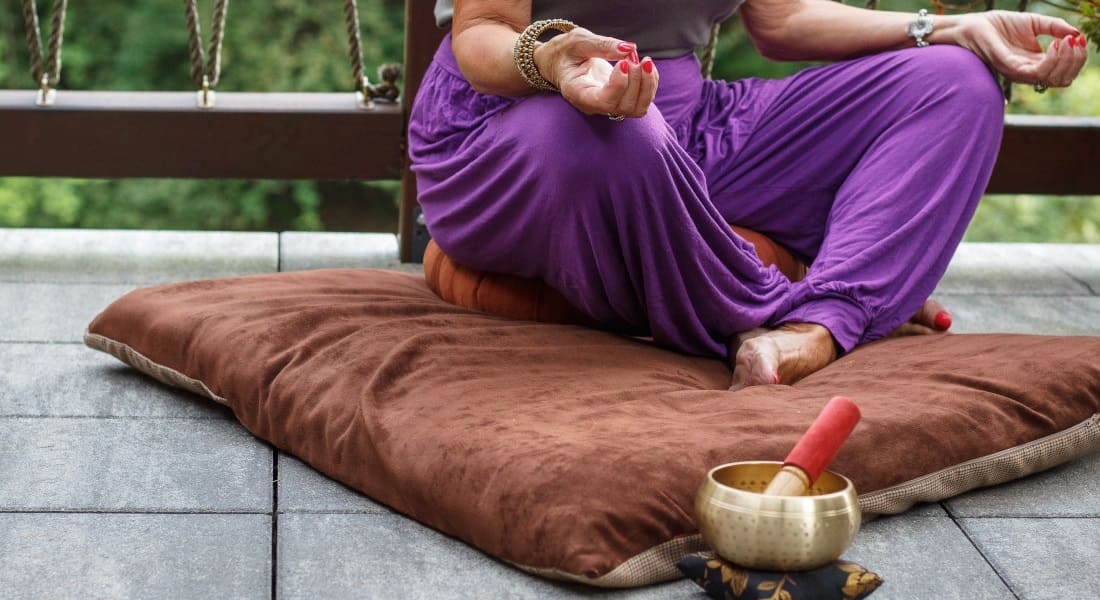
Using a Tibetan bowl isn’t something you should just wing. To get the most out of it, your body should be in a comfortable position you can hold for at least 10 minutes. Some people stand, while others sit on a chair or cross-legged on a cushion. As long as you’re comfortable, you’re on the right track. That said, we recommend avoiding the full lotus position, which many people picture when they hear “Tibetan singing bowl,” “relaxation,” or “yoga.” If you’re not flexible enough to hold this pose without pain, we recommend the half-lotus or a simple cross-legged position instead. The goal is comfort—any discomfort will distract you from getting the bowl to sing properly.
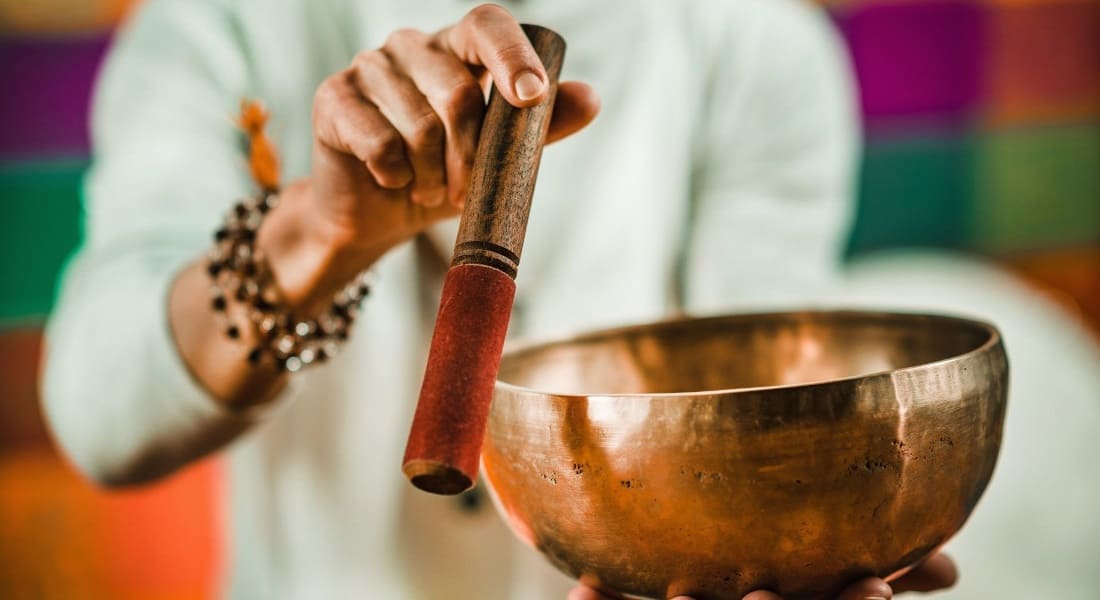
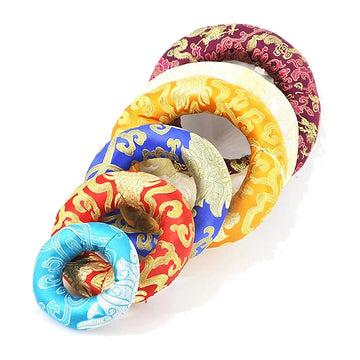
Next, you’ll want to think about how to hold the instrument and its stick or mallet. The bowl sits in your non-dominant hand, resting on an open palm with fingers spread according to the bowl’s size. If you close your hand around the sides of the instrument, the vibrations produced will be less intense, which is not the desired effect. You can also rest the singing bowl on a flat cushion or, better still, a donut-shaped cushion. Again, this particular shape is chosen to better amplify the vibrations. In any case, do not place it directly on a hard surface.
The stick, also called an “puja,” is held as you would hold a pen with your dominant hand. You can hold it just by the handle, or lower down, until your fingertips touch the beginning of the leather or fabric covering the wood for a better grip. The latter is better for coaxing a Tibetan bowl to sing using the rubbing technique, which we’ll cover shortly. The mallet is held just like a pen. In all cases, keep your wrist flexible as you move.
How do you make a Tibetan singing bowl sound and vibrate?
To make a singing bowl vibrate properly, start with the striking method. Simply use a stick or mallet to give the outer wall a sharp tap. The tip of the stick or mallet should bounce off the metal wall of the bowl, not press against it. Use a moderate strike to produce a sound that’s pleasant for your ears; striking too hard can damage your eardrums.
Where your tool makes contact also matters. Avoid the lower part of the bowl; instead, aim for the upper section near the rim. To help you hit this part of the bowl, position the tip of the stick or mallet about 1 in (a few centimeters) from the bowl, just opposite the spot where you want it to strike, then simply swing your wrist without moving your arm. This way, you will always hit the desired part of the bowl.
In practice, it’s wise to use sticks for small bowls under 6 in (15 cm) across and mallets for larger models. You’ll enjoy richer tones. That said, feel free to switch things up. You’ll also find extra-small mallets for smaller bowls and larger sticks for bigger models, so the tool you choose should always match the diameter of your Tibetan bowl.
Once you have struck the bowl, it is advisable to wait until silence returns before striking it again. Note that if you have several Tibetan bowls placed on cushions around you, you can strike two singing bowls at the same time to combine their sounds. Watch the video below, which shows you how to strike a bowl with a mallet:
How to make a Tibetan bowl sing and resonate?
The method for making your Tibetan bowl sing is slightly more complex, but remains very accessible once you have mastered a few important details. The bowl is held in the same way as before. However, you will need a stick to make your bowl sing, rather than a mallet. Hold your stick vertically, at a 90° angle to the edge of the instrument. Then, press the leather or felt-covered end against the outer edge of the bowl and begin to describe a circle, making sure that the stick remains in direct contact with the edge of the bowl at all times.
For this technique to work, it is important to keep the stick at a 90° angle to the bowl. Keep your wrist still and use your arm and shoulder to apply the rotational movement. It is also important not to rotate too quickly. Stay gentle, steady, and calm. After a certain amount of time, which may be one or more turns, the Tibetan bowl will begin to sing. It will then produce a unique sound that you could never have achieved with the striking method. This sound will continue until you stop turning.
For sticks that are generally symmetrical, you can use either the felt or leather-covered part or the wooden handle directly for this technique. The wooden handle allows you to produce higher-pitched sounds, so we encourage you to try both options.
Finally, some singing bowl players like to strike the bowl once before beginning to play it. This initial strike is called the “impulse” and can make it easier to use the rubbing method if you find it difficult. However, with practice, it is entirely possible to do without it, as you can see in the video below:
In which direction should you make this percussion instrument sing?
You may be wondering which direction to turn your stick to make your singing bowl sing. This method works in both directions, clockwise and counterclockwise. However, users of Tibetan bowls who employ them in an energetic context, such as purifying a space or crystal-healing stones, generally turn clockwise.
Why can't I make my Tibetan bowl sing?
There are two possible reasons why your Tibetan bowl is not singing:
- The first: you have not followed one or more of the key points outlined above, particularly with regard to how you hold the singing bowl or its stick. Please reread our tutorial, making sure you follow all the instructions. Remember that the pressure and speed of rotation must be constant.
- Second: your Tibetan singing bowl is very poor quality, which may be due to its shape, but more likely its composition. The metal alloy used to make a singing bowl should not be chosen at random, as you can learn in our article dedicated to the 7-metal Tibetan singing bowl. Unfortunately, there is nothing you can do about this other than buy a new instrument.
How to play a crystal singing bowl: instructions
The techniques for playing a quartz or rock crystal singing bowl are exactly the same as those for a metal alloy model. The only difference is that very often, the mallets for crystal bowls have plastic tips rather than fabric, which allows you to use the rubbing technique as well, since they have more grip.
How long should I play with a singing bowl?
How long you play depends on several factors, including the purpose of the session. Here are some general guidelines for different contexts:
- Meditation and relaxation: For meditation or relaxation, a session of 10 to 20 minutes may be sufficient. This gives you enough time to enter a meditative or relaxing state, allowing the sound to calm your mind and relax your body. You can extend this time if you feel particularly stressed or need more time to reach a state of deep relaxation.
- Healing sessions: In a healing context, sessions can last from 20 to 60 minutes, depending on the specific needs of the individual. The use of singing bowls in this setting is often guided by an experienced practitioner who can adjust the duration and techniques used based on the client's response.
- Daily personal practice: For daily personal use, 5 to 15 minutes may be enough to center your thoughts, reduce stress, or simply start or end your day on a positive note.
- Space clearing: When using a singing bowl to clear or balance the energy of a space, a few minutes in each room may be sufficient. This depends on the size of the space and your intention.
Trust your body and intuition: if you feel guided to continue longer, go ahead, and if a sense of fullness or completion comes sooner, you can end the session. Stay attentive to how the sounds and vibrations affect your well-being and adjust the time as needed. The most important thing is the quality of the experience rather than the strictly timed duration.
Can I use the singing bowl every day?
Yes, you can use a singing bowl every day, and many enthusiasts find that daily sessions bring both physical and mental benefits. However, as with any practice, listening to yourself is essential. If you feel any discomfort or if daily use of the singing bowl becomes too intense, it may be wise to moderate your practice. Some people may find that less frequent use better suits their energy needs or schedule.
It’s also smart to experiment with different ways of incorporating the singing bowl into your daily routine to see what works best for you—whether it’s a short session in the morning to start your day, a meditative practice in the afternoon, or deep relaxation in the evening before bed.
Why sing a Tibetan bowl?
There are many reasons why musicians might want to play their Tibetan singing bowls. The main one is that they enjoy the deep, intense sounds, which facilitate introspection and help them enter a meditative state.
Secondly, many people turn to singing bowls for their healing properties. Scientific research has shown that regular use of Tibetan bowls can reduce stress, blood pressure, and chronic pain. These are just a few of the benefits of this instrument. You can read about all the benefits and virtues of Tibetan bowls in this other article.
Finally, musicians also turn to singing bowls for practices such as harmonizing and unblocking the chakras, purifying negative energies in a space, recharging crystal healing stones, or even vibrating water placed inside the bowl. You can find details of all these uses by reading our article that lists why and when to use a Tibetan singing bowl.
Use a good mallet with your musical instrument
Although using a Tibetan bowl may seem simple at first glance, it takes a little experience, patience, and practice to get the best possible sounds out of it, especially with the rubbing technique that makes the instrument sing. Now that you’ve read our article, you have all the tips you need to be sure you’re using your singing bowl correctly.
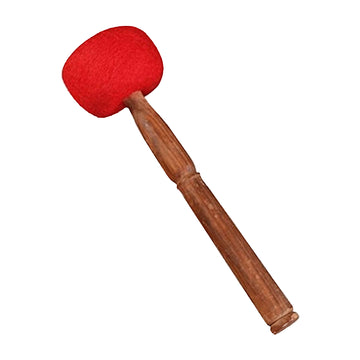
However, even if you know the techniques inside out, Tibetan bowls are rarely supplied with a mallet that truly brings out their full tonal richness compared to a simple stick. That’s why Instruments du Monde recommends using this mallet specially designed for singing bowls, which is available in two sizes to suit the dimensions of your instrument.
Get your own mallet by clicking on the image below:
You now know how to use a singing bowl. But did you know you can find this percussion instrument at almost any price point? Learn the real prices of Tibetan bowls by reading our article on the subject. If you think you know everything there is to know about singing bowls, test your knowledge by clicking on this article which contains all the information currently available on this musical instrument.


