



Written by Ambre Montespan on Sep 30, 2024 · Updated on Sep 25, 2026

Table of contents:
Have you recently discovered a musical instrument with a surprising shape called the handpan? Do you want to buy one of these sound sculptures with their mesmerizing tones? Are you wondering how to choose from the many models for sale? How do you pick your future handpan?
Having already purchased more than 10 handpans, including my first one several years ago, I asked myself the exact same questions you’re asking now. So, based on my experience, I’ll answer everything you need to know to help you make the best possible choice.
For beginners, it’s generally recommended to choose a 9- or 10-note handpan tuned to D Kurd. Otherwise, you’ll want to look closely at the number of notes, the scale, the material, the frequency, and the price of this percussion instrument.
Once you’ve taken the time to read this article, you’ll learn everything there is to know about the key criteria to consider when buying a handpan, including:
- The seller
- The number of notes
- The scale
- The material the instrument is made from
- The frequency
- The price
With all these factors in mind, you’ll be able to choose the handpan that matches your needs and your musical experience. You’ll progress quickly on your hang drum, and you’ll even be able to guide friends who want to buy one too.
Now let’s take a look at how to choose your next handpan.
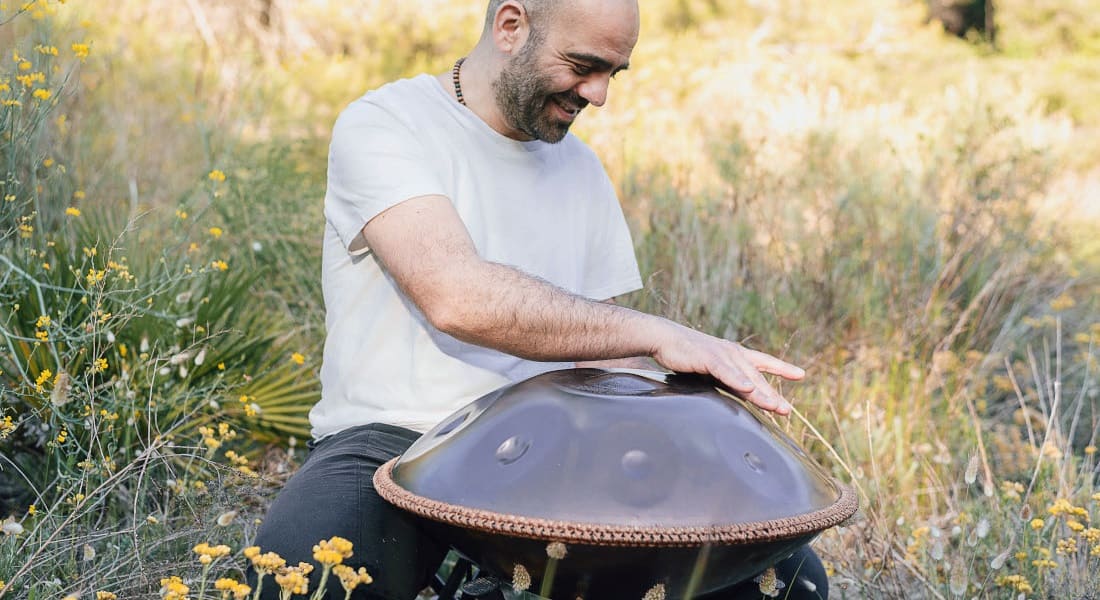
Where can you buy a handpan from a reliable website?
With growing demand and the handpan’s rising popularity worldwide, more and more websites are offering this musical instrument for sale. But wherever there’s money to be made, you’ll also find sellers who are anything but trustworthy—and sadly, handpans are no exception. Since I’m really into this instrument, I regularly see ads for various sites selling handpans, sometimes for less than €200. We’ll talk about price later, but it’s simply impossible to make a quality handpan at that price.
My advice, which honestly applies to any website trying to sell you anything, is this: always check the legal information. It should be available on the site (often in the footer) and is a must-have for any legitimate e-commerce business. In that section, you should be able to find:
- The company name
- The company’s registration number in its country
- A physical address
- The name of the person legally responsible for publication
- The VAT number if you reside in a European Union member country
- An email address and a phone number
- The name and address of the website host
This information is required by law. No reputable seller would ignore these obligations, since doing so can lead to serious fines. If one or more of these details are missing, you can always contact the site owner to request them, but in most cases, it means they don’t want to be identified—which is not reassuring when you’re buying a musical instrument worth several hundred or even several thousand euros. Also, check customer reviews on independent platforms like Trustpilot, which are usually more reliable than reviews shown only on the seller’s own website.
How many notes should you choose for your instrument?
The first criterion to consider when buying a handpan is the number of notes the instrument will have. Historically, the first Hang produced by PANArt Hangbau SA had 8 notes. Today, the models available for sale have many more. The number of notes corresponds to the creative possibilities of the percussion instrument. More notes mean richer, more complex melodies, though they also make the instrument a bit harder to learn. And of course, the more notes you add, the higher the price—usually around €100 to €200 per extra note.
Beginners are often steered toward models with 9 or 10 notes. However, if your budget allows, it’s absolutely possible to step up to 12 notes without the difficulty increasing too much. On the other hand, some handpans feature bottom notes, i.e., notes placed on the lower shell of the instrument. These bottom notes are harder to access while playing and demand real skill from the percussionist, so I don’t recommend a bottom-note model as a first instrument. Instead, choose a handpan with notes on the top.
In short, an 8- to 12-note handpan with all notes on the upper shell will suit the vast majority of musicians. If you’d like more details, I wrote a full article on this exact topic—read my guide to the number of notes on a handpan. You’ll see things much more clearly afterward.

Which scale should you choose for your hang drum?
The scale of the handpan is another key factor. The full set of notes tuned on the instrument is its scale. Depending on the scale, the handpan may be more or less challenging to play, but most importantly, it will convey different emotions to your listener(s). Handpans tuned to minor scales tend to produce meditative, introspective, and mystical sounds. Major scales, on the other hand, create brighter, more joyful, and more energetic tones. Just like the number of notes, it’s important to know you can’t change the scale once you own the instrument. If you want a different sonic world, you’ll need a second handpan tuned to another scale.
The most popular scale is D Kurd, sometimes written as d Kurd. It’s a minor scale that’s widely loved for how intuitive it feels. Even players who’ve never touched the instrument before—and who have no background in music theory—can do impressive things with it. And since most handpan players lean more toward a meditative vibe than an upbeat major-scale sound, it helps explain why D Kurd is so popular.
That said, there are many other scales, such as Amara, Pygmy, Akebono, and Hijaz. Each one has its own sonic signature, letting you explore very different musical worlds. Read my article dedicated to the different handpan scales. You’ll be able to choose with confidence—and listen to examples to help you decide.
Is the material of the handpan important? Nitrided steel or stainless steel?
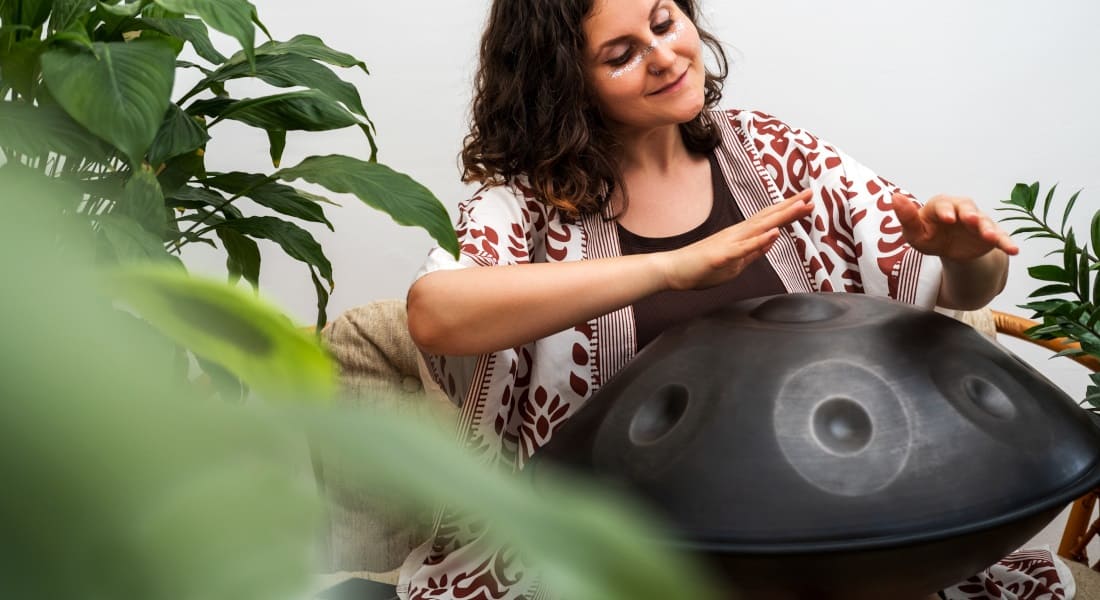
When buying a handpan, you’ll choose from several materials used to make the instrument. Of course, it’s always metal—more specifically, steel—but the characteristics differ and can change the handpan’s overall acoustics. There are currently three main steel types: nitrided steel, stainless steel, and ember steel (which is actually another type of stainless steel).
Nitrided steel is the metal used to create the first Hang instruments by PANArt Hangbau SA in 2000. It’s steel that has undergone a nitriding heat treatment, meaning nitrogen is added to the surface layer. This forms nitrides that increase hardness and improve corrosion resistance. Acoustically, nitrided steel handpans have the lowest sustain, meaning the shortest resonance after you strike a note. They’re ideal for musicians who play fast, highly percussive patterns and want minimal overlap when playing at higher tempos. For maintenance, nitrided steel, while corrosion-resistant, still needs regular attention and should be kept away from moisture since rust can show up quickly. And if the surface gets scratched, the untreated steel underneath is exposed to air because only the surface layer is treated.
Stainless steel is the most popular alloy and the one I personally recommend. This steel contains chromium, which greatly reduces the risk of rust. Plus, it’s not just the surface—the entire steel sheet is stainless, which is a big advantage if you get scratches. Acoustically, sustain is moderate, making a stainless steel handpan very versatile. Since it needs little maintenance, it’s the best option for beginners or anyone who doesn’t want to spend much time cleaning and protecting their instrument.
Ember steel is a newer type of stainless steel with long sustain. Professionals love this material because it opens up more varied playing possibilities. Naturally, it shares the same advantages as stainless steel handpans. However, the price is much higher. While nitrided and stainless steel handpans are often similarly priced, ember steel handpans can cost two to three times more for the exact same instrument in the same key, with the same number of notes. That’s because they’re rarer, and the material takes more work and energy to shape. Read my article on the different types of steel used for handpans to find out more.
Which frequency should you choose between a 440 and a 432 hertz model?
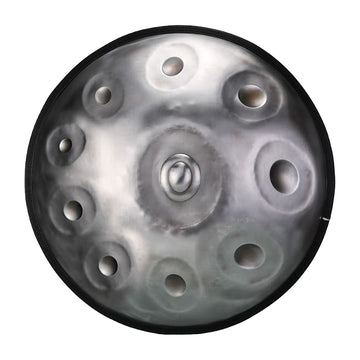
With handpans, the frequency (in hertz) refers to the reference pitch used for tuning—specifically the A that the instrument is built around, also known as concert pitch. All the other notes are then calculated from that reference. In the handpan world, there are two main tuning standards: 440 Hz and 432 Hz.
440 hertz has been the standardized tuning reference since the 1950s. In other words, most instruments worldwide—and therefore most recorded music—are tuned to a concert pitch of 440 Hz. This standard was adopted because, before that, tuning varied by country. For instance, A in France wasn’t exactly the same as A in Germany or Italy, which created practical issues. A handpan tuned to 440 Hz follows the modern standard and can easily be played with the vast majority of other instruments.
432 hertz is an alternative tuning standard where all notes are slightly lower. It’s sometimes called Verdi’s A, since the Italian opera composer Giuseppe Verdi favored it in the 19th century, long before 440 Hz became the standard. The main drawback is that a 432 Hz handpan can only comfortably play with other instruments tuned to 432 Hz, which are relatively rare. So why is it sold at all? Some players feel that 432 Hz sounds more natural, helps them relax more easily, or even offers therapeutic benefits. It’s important to note that none of these claims have been confirmed by scientific studies. Others simply prefer the sound of melodies played at 432 Hz, without taking a stance in the debate. Click the link below to learn more about handpan frequencies. You’ll find all the common arguments from 432 Hz supporters so you can form your own opinion.

How much does a high-quality handpan cost?
The handpan is an expensive instrument. The price, which can range from a few hundred to a few thousand euros, is justified by the fact that makers spend dozens of hours hand-hammering the instrument’s metal shells. As a result, an entry-level, high-quality handpan will cost around €1,000. These days, you can find much cheaper options, sometimes for just a few hundred euros, but they’re usually machine-pressed instruments with no real manual tuning. I can’t recommend those handpans because their acoustics and the steel used are often mediocre.
Price alone isn’t a guarantee of quality, but a model under €500 is very unlikely to fully satisfy you. The cost also depends on several factors, including the number of notes, the material, the scale, and the frequency. As a general rule, the more unusual the handpan, the higher the price. To better understand the price of a handpan, check out that article for more details.
Buy your handpan from a trusted store
With so many handpan options available today, it can be hard to know where to start. Between the number of notes, the scale, the material, the frequency, and the price, there’s a lot to weigh—and once you’ve chosen an instrument, you can’t really go back. But thanks to all the advice I’ve shared in this article, you should now have a much clearer view of how to select the handpan of your dreams.
That said, it’s crucial to pay close attention to the seller you’re ordering from. There are plenty of bad deals out there for uninformed buyers. That’s why I personally recommend the French store Instruments du Monde, which offers dozens of high-quality handpan models. You’ll benefit from the professionalism and reliability of a well-known specialist.
Trust a recognized professional and click on the image below to discover all the handpans available.

Have you ever noticed your instrument starts sounding out of tune after a while? That usually means it’s time to retune your handpan. Read my article to discover the best solutions to this tricky problem.


