



Written by Ambre Montespan on Jun 3, 2024 · Updated on Oct 15, 2026

Table of contents:
Have you made the wise decision to immerse yourself in the enchanting world of Tibetan singing bowls? Have you noticed that some bowls are tuned to specific frequencies such as 432 or 528 Hz? What do those frequencies actually mean? What do they change, in practical terms, for your singing bowl? How do you choose the ideal frequency for your needs? Is one frequency “better” than another for a Tibetan singing bowl?
Having guided more than 100 people in choosing their Tibetan singing bowl based on their personal goals, I’m well-equipped to give you the insights you need to choose the right frequency for your future Asian musical instrument.
While there’s no scientific proof behind these claims, Tibetan singing bowls are sold in noticeably different tunings, and each one is associated with supposed benefits. For instance, bowls tuned to 440 Hz are said to improve mental clarity, 432 Hz to encourage deep relaxation, and 528 Hz to support DNA repair.
By reading this article carefully, you’ll be able to choose the hertz frequency that best matches what you’re looking for. In particular, you’ll discover:
- What “frequency” actually means for a musical instrument
- Tips for choosing the frequency of your future Tibetan singing bowl
- The different frequencies available for a singing bowl
By the end, you’ll know how to choose the best possible frequency for your Tibetan singing bowl. It can then become the perfect companion for meditation and other calming practices.
Now, let’s dive into Tibetan singing bowl frequencies in more detail.
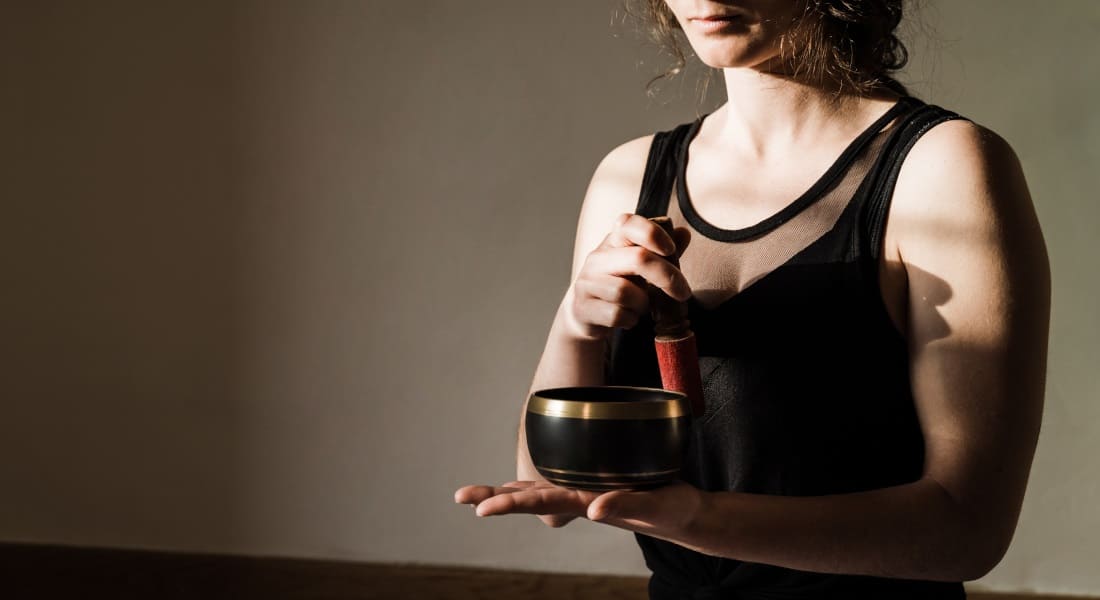
What is the frequency for a Tibetan bowl?
The frequency of a Tibetan bowl refers to the sound (or musical note) it produces when struck or rubbed with a mallet. Each singing bowl has a fundamental tone—the main pitch you hear when it’s played. That tone is influenced by the bowl’s size, shape, and thickness. Beyond the fundamental, a Tibetan singing bowl also produces several harmonics (higher tones created by the bowl’s vibrations). These harmonics are what give the instrument its richness and complexity.
The frequency of a Tibetan bowl is usually measured in hertz (Hz). Frequency indicates how many vibrations per second the singing bowl produces. For example, a bowl might have a fundamental frequency of 523 Hz, which corresponds to the note C in the tuning standard reference. Frequency is directly related to pitch: higher frequencies sound higher, while lower frequencies sound deeper.
When a Tibetan bowl is described as “tuned to 440 hertz,” it doesn’t necessarily mean the bowl produces a 440 Hz tone. Instead, it means its notes are aligned with the 440 Hz tuning standard (concert pitch), which is a different idea. For example, a bowl aligned to the 440 Hz standard and tuned to the note B will produce a fundamental frequency of 493 Hz. A G in that same standard would be 392 Hz. In practice, the “440” refers to the note A4 (the A above middle C, in the fourth octave). All other notes are then calculated from that reference according to mathematical rules.
Why are there several frequencies available for singing bowls?
According to ISO 16:1975, the acoustics standard, the normal tuning reference is 440 hertz. Before this international standardization, music and instruments were tuned to different frequencies. Until the end of the 20th century, major American orchestras, such as the New York, Chicago, and Boston Philharmonics, often preferred a tuning of 442 hertz. Under the direction of Claudio Abbado, the Vienna Philharmonic played at 447 hertz; in Berlin, the frequency reached 448 hertz; and in Moscow, it approached 450 hertz. In other words, depending on where you were, the same piece of music could sound slightly more or less bright.
So, the standard tuning reference is 440 hertz. However, some Tibetan singing bowl makers and users have become interested in other tunings, such as 432 and 528 hertz, which are said to offer therapeutic, energetic, or spiritual benefits. In the case of 432 hertz, the A4 reference is no longer 440 hertz but 432 hertz; in the case of 528 hertz, it’s a C that’s tuned to 528 hertz, which puts A4 at 444 hertz. This automatically shifts the frequency of every other note because they’re all calculated from that A. As a result, as we saw earlier, if a G in the 440 Hz standard is 392 Hz, the same G in the 432 Hz standard is 385 Hz. So with Tibetan singing bowls, the main reason to choose a different tuning is to explore the supposed benefits associated with it.
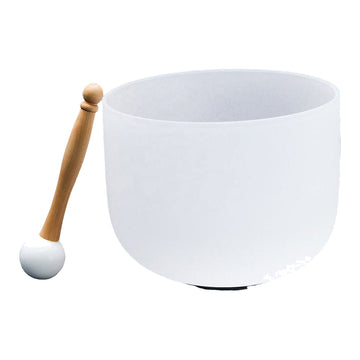
You may have noticed that singing bowls tuned to 440, 432, and 528 hertz are often made from quartz crystal. That’s because the traditional method of manufacturing Tibetan bowls from metal alloys doesn’t allow for extremely precise tuning the way quartz does. Yet that level of precision is essential if a seller claims a bowl is accurate “to the hertz.” So be wary of Tibetan metal bowls advertised with a specific frequency: most of the time, the bowl you receive won’t be tuned as precisely as claimed. If you want true pitch accuracy, go with quartz crystal.
What are the benefits of Tibetan singing bowls depending on their frequencies?
Keep in mind that your choice of frequency for your Tibetan singing bowl should be based on your goals. Here are the main tunings I recommend considering for your Tibetan singing bowl.
1 - Tibetan bowls at 440 hertz
Here are the supposed benefits and advantages of a Tibetan singing bowl tuned to 440 hertz:
- Reducing stress and anxiety: The vibrations and sounds produced by a 440 Hz Tibetan singing bowl may help calm the mind and reduce feelings of stress and anxiety. They can encourage a deeply relaxed state, similar to meditation.
- Improving focus and mental clarity: Regular use of a 440 Hz singing bowl may help support concentration and mental clarity. The harmonious tones and vibrations can be associated with calmer, more focused mental states.
- Emotional balance: 440 Hz sounds are often associated with emotional grounding, bringing a sense of peace and stability—especially helpful during emotionally challenging periods.
- Better sleep: Soothing vibrations can support sleep quality by helping calm the mind and body before bed, which may lead to deeper, more restorative rest.
- Pain relief: Sound sessions with a 440 Hz Tibetan singing bowl are sometimes used to help ease certain physical discomforts. The vibrations may stimulate circulation and encourage the release of endorphins (feel-good hormones).
- Reducing muscle tension: The sounds and vibrations may help relax tight muscles and ease physical tension, which can be especially appreciated by people dealing with chronic muscle tightness.
- Boosting energy and vitality: Sessions with a 440 Hz Tibetan singing bowl can feel invigorating, helping revitalize the body and mind. The vibrations are often described as gently stimulating the body’s energy centers and supporting overall well-being.
- Harmonizing body and mind: 440 Hz sounds are frequently used in practices aimed at balancing the chakras (energy centers), supporting a feeling of alignment between body and mind.
2 - Tibetan singing bowls at 432 hertz
Here are the supposed benefits and advantages of a Tibetan bowl tuned to 432 Hz:
- Natural harmony: 432 Hz is often described as a tuning that feels more “in sync” with nature and the universe. It’s said to resonate in a way that feels natural to the body, encouraging a sense of connection with the world around you.
- Enhanced meditation: Many meditation practitioners find that 432 Hz bowls support deeper meditative states. The soft, harmonious tones can help settle the mind and encourage a more inward focus.
- Body resonance: 432 Hz is sometimes believed to resonate more effectively with the human body, supporting healing and cellular regeneration. The vibrations may help release energetic blockages and encourage the flow of vital energy.
- Strengthening intuition: 432 Hz singing bowls are often associated with strengthening intuition and deeper spiritual awareness, supporting self-understanding and a more connected inner experience.
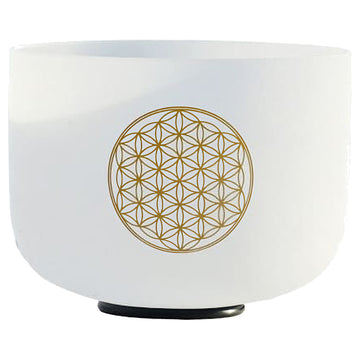
3 - 528 Hz singing bowls
Here are the supposed benefits and advantages of a Tibetan bowl tuned to 528 Hz:
- DNA repair and cellular healing: 528 Hz is commonly referred to as the “DNA healing frequency.” It’s often associated with supporting DNA repair and cellular regeneration, which could be linked to improved physical well-being and faster recovery.
- Transformation and miracles: 528 Hz is also sometimes called the “miracle frequency.” It’s associated with deep transformation and positive change. Sounds at 528 Hz are believed to help release emotional and energetic blockages, making space for personal and spiritual growth.
- Increased love and compassion: 528 Hz vibrations are said to encourage heart openness and stronger feelings of love and compassion. This tuning is often chosen to support a deeper connection with yourself and others, fostering more harmonious relationships.
- Stimulation of creativity: 528 Hz is also linked to creativity and inspiration. By supporting a calmer mind and a more open heart, it may help unlock creative potential and encourage artistic expression.
4 - Other more exotic frequencies for this musical instrument
More rarely, you may also come across Tibetan bowls tuned to frequencies other than the three listed above. In reality, a maker can offer countless tunings and describe the benefits they associate with each one.
Is there a real audible difference between all these frequencies?
The difference between 440 and 432 hertz is only 8 hertz. This difference is barely perceptible to the human ear, especially if you’re over 30, when hearing naturally starts to decline over time. On the other hand, the difference with 528 hertz is clearly noticeable—the sound will be much higher in pitch.
Are the benefits of these frequencies based on scientific reality?
Many studies support the overall benefits of music therapy. The same is true for Tibetan singing bowls and their many potential benefits, some of which have been highlighted in research. This Asian instrument may help reduce stress, improve mood, and even support pain management and physical recovery. However, there is no specific scientific evidence showing that one particular frequency has specific therapeutic effects. Many of the benefits listed above may therefore be more belief-based than proven. Positive experiences reported by users at different frequencies can also be influenced by placebo effects or expectations—simply believing in a method can sometimes produce real perceived benefits. So it’s wise to keep a level-headed perspective.
Choose a high-quality instrument with the desired frequency
If you’re not familiar with music theory, choosing a frequency can feel confusing or even random. It’s easy to get overwhelmed by the options. But with everything you’ve learned in this article, you can now confidently select the best Tibetan singing bowl for your needs.
That said, one real challenge remains: finding a high-quality bowl that’s genuinely tuned to the frequency being advertised. It’s not unusual to see bowls marketed as 432 hertz that aren’t actually tuned that way. That’s why I recommend Instruments du Monde, which offers a wide selection and carefully chosen singing bowls that are properly tuned to specific frequencies. For example, this pure quartz crystal model is available in 440 or 432 hertz.
Select your favorite frequency for this singing bowl by clicking on the image below:

Some musicians hesitate between Tibetan bowls and gongs in their search for escape and sound-based relaxation. Read my article to figure out which one fits you best. Also, if you want to learn more about singing bowls, take a few minutes to read this other article, which is a real gold mine of information about this Asian percussion instrument.


