



Written by Ambre Montespan - Updated on Aug 11, 2026
Table of contents:
Were you thinking about treating yourself to a handpan, but the price tag for this type of instrument cooled your enthusiasm a bit? Did you want to buy this sound object, only for a maker to tell you there was an 8-month wait to get yours? Have you heard that the handpan is relatively fragile, and are you afraid to invest so much in this precious instrument? Are there any credible alternatives to this metal percussion instrument?
Having been in these same situations a few years ago, I spent a lot of time looking into instruments with sounds relatively similar to the handpan. So, I can suggest 4 interesting alternatives.
The handpan does have a few alternatives. The most obvious is the tongue drum, which was actually invented as a low-cost handpan. Otherwise, you can turn to the kalimba, the ocarina, or even the Tibetan singing bowl.
As you read this article, you’ll discover the following instruments that can serve as substitutes for the Hang drum:
- The tongue drum
- The kalimba
- The ocarina
- The Tibetan singing bowl
This will help you choose the right musical instrument while trying to get as close as possible to the sound and acoustic experience offered by the handpan.
Let’s now take a closer look at these four alternatives to the handpan.

Why look for an alternative to the handpan?
Before listing the interesting options for replacing the handpan, it’s important to understand why people who want to get one often end up looking elsewhere. After speaking with many of them, three main reasons come up again and again.
First, the price. For a quality handpan, you generally need to budget between $930 and $3,480, which is still a very significant amount to spend. Of course, cheaper models do exist, since you can find handpans from China for under $460, but that isn’t really a choice I recommend for a first handpan, because you risk being quickly disappointed and limited by the sound quality. So, the price of a handpan remains a major obstacle for most future buyers.
Next comes availability. The handpan is an instrument that inevitably requires a human to tune it for several hours by hammering it. This manufacturing process is what justifies its price, and it is precisely this aspect that low-quality, bargain-priced handpans take advantage of, as they are mainly produced by machines and deliver a mediocre result. Beyond the price, the problem sometimes comes from the time it takes to make a handpan. It isn’t unusual for a maker to ask for several months to produce the model of your dreams. But sometimes people simply don’t have the luxury or the desire to wait that long, especially when the instrument is meant to be a gift for an event.
Finally, the third issue frequently mentioned is fragility. The handpan is an instrument mainly made from a very thin layer of steel, between 0.04 and 0.05 in (1 and 1.2 mm) thick. As a result, the slightest hard impact detunes the handpan, instantly causing it to lose almost all of its value. In addition, the handpan is vulnerable to rust, corrosion, heat, cold, and humidity, and it requires careful maintenance. Many beginners prefer a more forgiving instrument to start with.
All of these factors mean that the handpan is sometimes set aside in favor of another instrument. That brings us to the tongue drum, which removes all the constraints mentioned above.
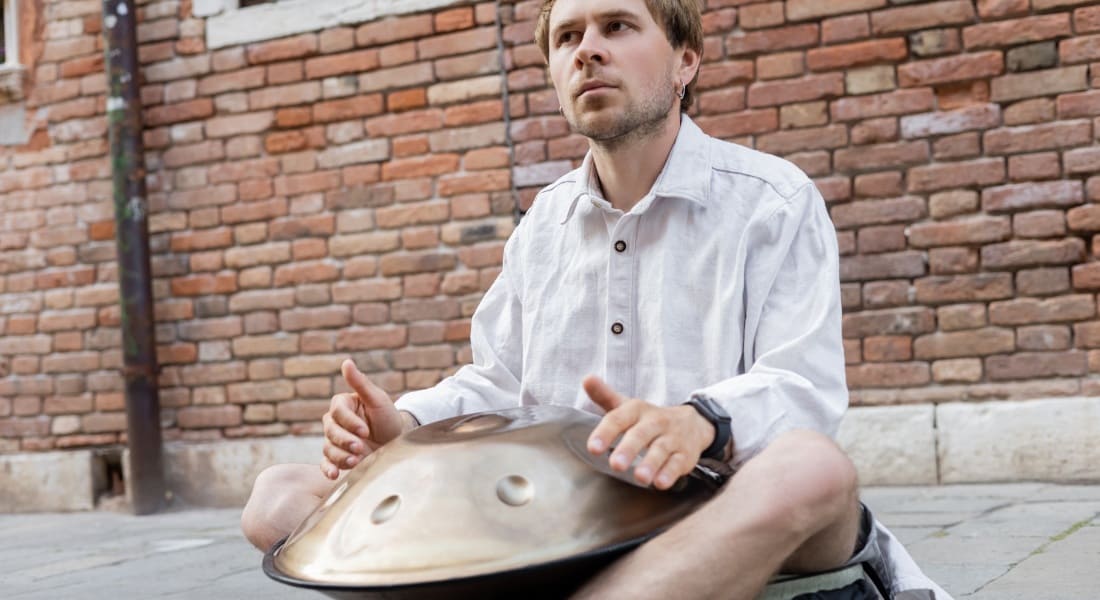
The tongue drum, the logical choice to replace the handpan
Why is the tongue drum the logical choice as the first alternative to the handpan? Quite simply because it was invented for that exact purpose. In fact, this instrument was designed by Dennis Havlena in 2007, about 7 years after the handpan was created, because he didn’t have enough money to buy one. So he handcrafted the tongue drum from an empty gas cylinder and cut tongue-shaped notes into the metal, which gave this sound object its name.
Since no hammering is involved, the tongue drum is significantly less expensive. You can expect to pay between $230 and $410 for a quality model. Also thanks to the absence of hammering, it can be produced more quickly, so there is almost never a waiting period. Finally, the metal used to make the tongue drum is much thicker, and today’s models are made from stainless steel alloys that protect against corrosion. This makes the tongue drum very durable. For example, I’ve seen someone accidentally step on their tongue drum with their full weight, and the instrument’s tuning didn’t move. That is simply impossible with a handpan, which would never have withstood the load.
To top it all off, the tongue drum is already tuned during manufacturing (just like the handpan), so it can be played right away, even by a beginner who won’t be able to hit wrong notes the way they might on a violin or guitar. All these advantages make the tongue drum the best possible alternative, especially since its sound is the closest to a handpan. Listen in the video below:


The kalimba, with harmonious sounds reminiscent of the Hang drum
Another interesting alternative to the handpan is the kalimba. It is a small instrument, usually made of wood, with metal tines mounted on a set of bridges. It is a much more affordable alternative than the handpan or the tongue drum, since entry-level prices for this lamellophone start at $50 for decent models. In addition, it is a very lightweight and portable instrument, weighing about 10.6 oz (300 g) and fitting into a small bag, while a handpan weighs 8 lb 13.1 oz (4 kg) and is about 22 in (55 cm) in diameter. The sounds are different from a handpan’s, but they stay in a fairly similar register, as you can hear in the video below:
The ocarina, a substitute for this metal percussion instrument
Stepping outside the percussion instrument category, the ocarina naturally comes to mind when looking for an alternative to the handpan. The very airy tones of this small instrument, which can slip in just about anywhere, are very pleasant, and the fact that it is also tuned during manufacturing, just like the handpan, makes it accessible to beginners. The price remains very low, with quality entry-level models around $50. That said, the ocarina is a rather fragile instrument, because in the vast majority of cases it is made entirely of ceramic. But it is much less sensitive to heat or humidity. Listen to an ocarina piece in the video below:
The Tibetan singing bowl, to stay within the meditative and relaxing side of the handpan
Some people discover the handpan and are mainly drawn to the relaxing and meditative side provided by the vibrations of this sound object. This practice has a name: sound therapy. If you are drawn only to this aspect, the obvious replacement instrument is, of course, the Tibetan singing bowl. It is a metal instrument shaped like an inverted bell, with origins in the Himalayan mountain ranges, and it is said to have long been used by Buddhists and other earlier religions. Very durable and less expensive than the handpan, the Tibetan singing bowl will generally play only one note, which can be offset by using a set of several instruments. Watch how a Tibetan singing bowl works in the video below:
And what if the best alternative to the handpan were... a handpan
There isn’t just one good alternative to the handpan, but several, and the right choice depends above all on your intention. To start with peace of mind, the tongue drum remains unbeatable. For traveling light or giving as a gift, the kalimba or ocarina ticks every box, while the Tibetan singing bowl is geared toward relaxation. With the help of this article, you are certain to find the ideal instrument to replace the handpan you wanted.
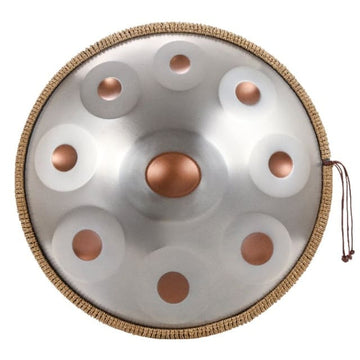
However, the best alternative to the handpan remains... a handpan, but one chosen smartly. In fact, there are now handpan models made from excellent stainless steel for a price under $1,160. This allows you to get an affordable handpan that will require much less maintenance than a classic nitrided steel model. And to get one, I recommend Instruments du Monde, which offers dozens of models for sale, including affordable stainless steel handpans, such as the Harmonie model.
Get to know this superb handpan right now by clicking the image below:
If you really want to treat yourself to a handpan, one option might be to look at a budget-friendly model. But to avoid the many pitfalls that come with this kind of purchase, read my article titled "Cheap Handpans: Are They a Good Idea?" There you'll find plenty of tips to help you buy your percussion instrument the right way.


