



Written by Ambre Montespan on Mar 14, 2023 · Updated on Oct 15, 2026

Table of contents:
Have you heard the soothing sounds of the thumb piano and are wondering which model to choose for your child? At what age can you give a kalimba as a gift? Is it beneficial for pregnant women to play the mbira (another name for the kalimba) for their baby?
As a mother of three, I’ve been in that exact situation myself, wanting to introduce my little ones to music. I’ve also advised dozens of young parents who wanted to know how to incorporate the kalimba into their children’s or teenagers’ education. So I can help you choose the right thumb piano, no matter how old the person is who will receive it!
The kalimba is suitable for all ages, from young children to adults and teenagers. However, there are a few rules to follow to make sure the person using it doesn’t end up frustrated with an instrument that isn’t right for them.
By reading the following few lines, you will learn:
- The golden rule to follow when choosing a kalimba for young children
- Which thumb piano is recommended for a baby, child, teenager, or pregnant woman
- Up to what age it’s possible to play this musical instrument
You’ll then be able to choose the kalimba that best suits your situation, and the person you give it to is guaranteed to have a great time making music with this gift!
Let's find out the answers to these questions right now.
How to choose the perfect mbira for young children?
To choose the perfect mbira for any child, you need to avoid one crucial mistake by applying a simple rule.

The mistake to avoid when choosing a kalimba for a child
The main mistake I've noticed when parents choose a kalimba for their child is that they tend to overestimate their child’s abilities. It’s human nature and relatively normal—every parent puts their child on a pedestal. However, that doesn’t necessarily help when it comes to choosing a kalimba.
In fact, it’s not uncommon to see an 8- to 10-year-old holding a 17-tine kalimba. Most look overwhelmed by the large number of keys and end up playing notes at random without intending to create a melody. Others simply leave some keys unused, playing only the central ones.
On the other end of the spectrum, I occasionally encounter teenagers aged 13 to 15 with 5-tine kalimbas. Here, the opposite happens: the instrument’s limited possibilities just aren’t enough for their age, and boredom sets in fast.
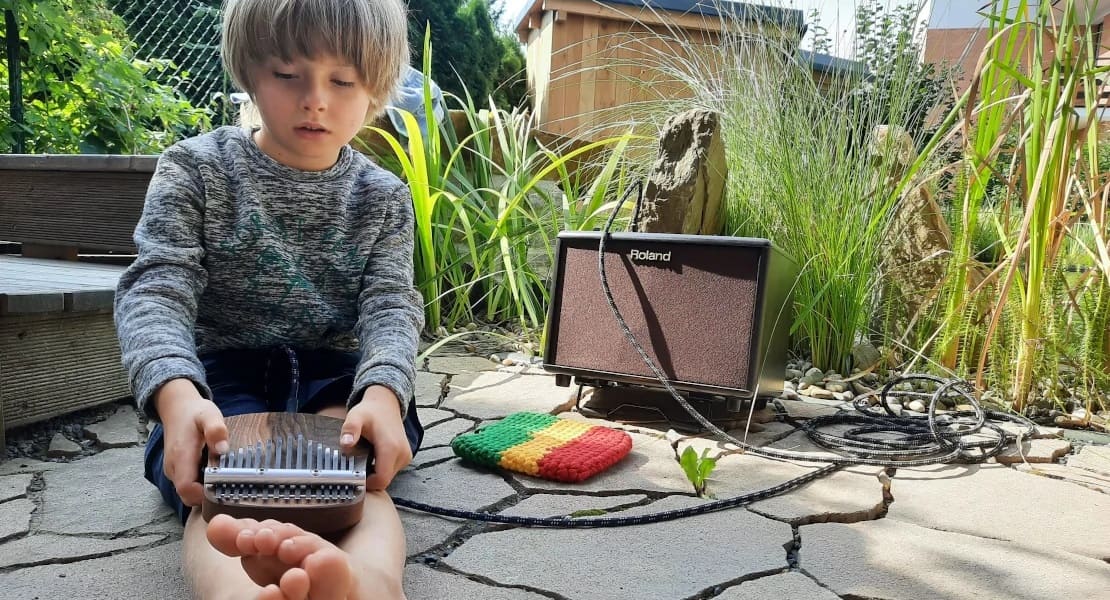
All this leads to the conclusion that the number of tines is the determining factor when choosing a kalimba for a child. If there are too many for their age, they’ll likely get frustrated by the difficulty. If there are too few, they’ll get bored quickly. In either case, the result is the same: the kalimba ends up abandoned in a corner and eventually disappears.
But don't worry! By applying the simple rule below, you’re sure to choose the right number of keys.
The golden rule for choosing the right thumb piano for any age
The rule for choosing the right thumb piano for a child is pretty simple: aim for about one tine per year. So, for example, if the child you want to give a kalimba to is 10 years old, a 10-tine instrument is the most likely to suit them.
Of course, this rule isn’t set in stone. For teenagers who already have solid experience with music and music theory, you can go up in the number of tines. On the other hand, for children who have little interest in musical instruments, you can choose one with slightly fewer tines. This should never be seen as a “delay.” Some people simply aren’t drawn to music, but it would be a shame to skip the experience altogether. You can always move up to a larger kalimba later, once the first one feels comfortable.

This rule should also be adapted for children or adults with disabilities or serious illnesses that make it harder to use their thumbs or hands. In that case, it’s up to you to decide what best fits the person’s situation.
Nevertheless, this golden rule gives you a solid basis for choosing the right kalimba for a child. You’ll only need to make a small adjustment if you feel it’s necessary.
Using the thumb piano for pregnant women and babies
The title may seem surprising, but yes, the thumb piano can absolutely be used for pregnant women and babies. To convince you, let's take a very simple and well-known example: the pregnancy bola. For those who don't know what it is, the pregnancy bola is a traditional Indonesian metal piece of jewellery in the shape of a sphere, which works vaguely like a bell. This piece of jewellery is hung around the neck of the mother-to-be using a long cord or chain that hangs down like a necklace to rest on the belly.
Throughout the day, the bola emits more or less the same sound with the mother’s movements, allowing the fetus to hear it for many months (from the 19th week, to be precise). Once the baby is born, the bola can be placed as close to them as possible—on their crib, stroller, or even inside their comfort blanket—so they can continue to hear this familiar sound signature that reassures them as they enter a huge new world.

But what’s the connection with the kalimba? As you’ve probably guessed, the bola’s signature sound can also be recreated on the kalimba. When a musician plays the thumb piano, they naturally hold it close to their belly. By regularly playing melodies with this instrument near the unborn baby, you’ll create a familiar sound signature for them. Then, when you play the same music again after birth, the baby will recognize it, which can be deeply comforting.
And the most wonderful thing about the kalimba is that your baby will very quickly be able to play a few notes, too. The simplicity of this instrument is its strength. By watching their mother or father play the kalimba, they’ll quickly understand how it works and want to try it. You’ll create unforgettable bonding moments with this little instrument. That said, you should never let a baby play with a kalimba alone—it should always be under adult supervision.
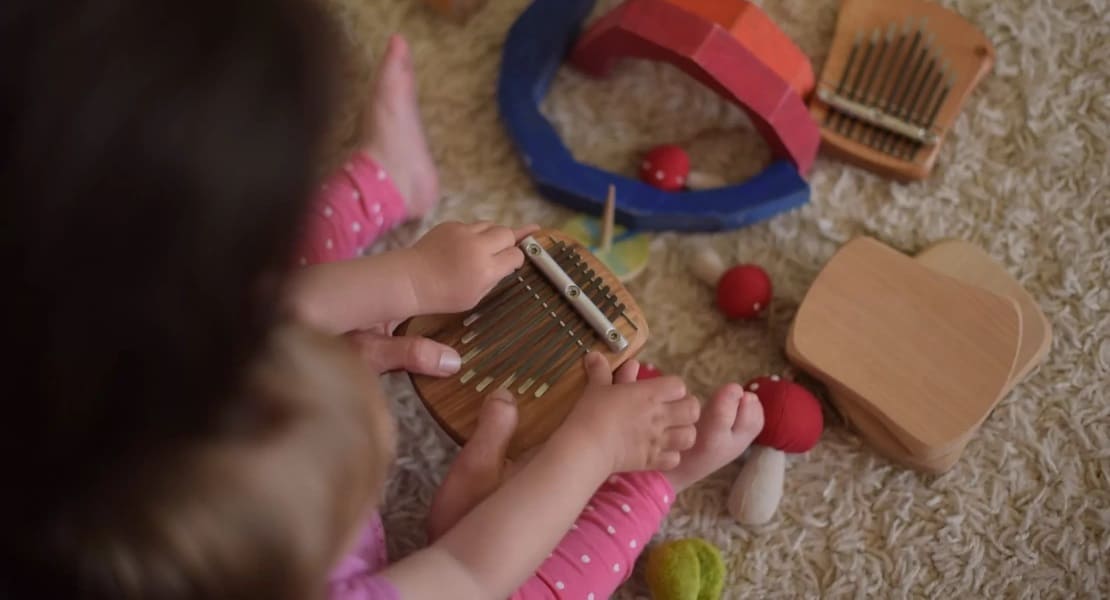
When choosing an instrument in this situation, you have two options. Either the adult only intends to play for the child, in which case you can choose any kalimba you like. Or, you may also want to involve your baby in their future musical development, in which case a thumb piano with 5 to 10 keys is a great idea, because the child will quickly be able to play along with their parents.
At what age can a child start playing the kalimba?
Children can play the kalimba from any age. You just need to be careful with children under 3, who must use it under constant adult supervision. Even though they are not supposed to come apart accidentally, there are small screws that hold the kalimba's pressure bar in place and could be swallowed.
When choosing an instrument, we recommend following the golden rule mentioned above. For example, a 5-tine kalimba is ideal for a 5-year-old. A 10-tine kalimba is also suitable for a 10-year-old.
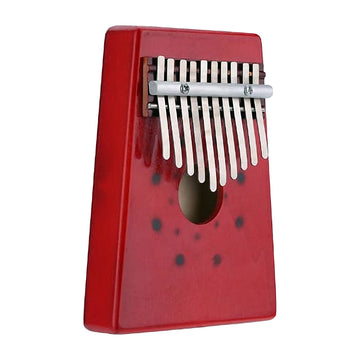
One particular point to note about this age group: depending on their temperament, a child can be a little rough and may not take great care of their belongings. It is therefore advisable to choose a kalimba that is fairly sturdy and less likely to be damaged if knocked or dropped. For example, although mahogany is a wood commonly used to make mbiras, it is quite soft. Therefore, padauk, birch, or acacia wood would be more suitable. If you’d like more details about wood types, check out our guide to choosing wood for your kalimba; you’ll learn about the advantages and disadvantages of each option. It’s also worth noting that a kalimba without a sound box will be more durable than one with a sound box.
Is the kalimba good for children?
Playing the kalimba offers nothing but benefits for children’s development. It supports coordination and fine motor skills while improving memory, since they need to remember where each note sits on the tines and learn the songs they want to play. However, these benefits apply not only to children, but also to adults.
Which instrument should you choose for a teenager?
Again, for those who are almost adults, the rule we discussed earlier applies. So, for a 17-year-old teenager, you can absolutely consider giving them a standard 17-tine kalimba.
However, after 17, the rule above no longer applies. You don’t necessarily need to buy a 21-key thumb piano for a musically advanced teenager or a 21-year-old adult. If you're unsure between these two models, take a look at our article to help you choose between a 17-key or 21-key kalimba. You’ll see that the criteria are much more nuanced than simply the player’s age.
Up to what age can you play the kalimba?
You may also be wondering whether the kalimba is suitable for older people. Again, there is no age limit for playing this African musical instrument. Giving a thumb piano to an elderly person has nothing but advantages. It helps maintain coordination and motor skills. Memory is also used to play the notes.
In addition, the kalimba is widely used in music therapy, which uses music and instruments as part of a care approach. The relaxing effect of this instrument is highlighted to offer a gentle, supportive practice with positive effects on physical and mental health. It’s important to always choose an instrument that matches the person you’re giving it to. For example, some older players may have Parkinson's disease and find it challenging to press the desired key on the kalimba. To avoid frustration, a simpler thumb piano with fewer tines is worth considering.
To wrap up, don’t put limits on yourself. Older people often appreciate the kalimba because it’s small, lightweight, and compact, and they can play it regularly without depending on anyone else. It might even inspire children, grandchildren, and great-grandchildren to pick it up!

Give your child a very sturdy sanza!
We’ve reviewed all age groups, and one thing remains the same: anyone can play the kalimba! You simply need to adapt the number of keys to the person who will be playing it so they can enjoy their instrument to the fullest, without frustration or boredom. Now that you know what pitfalls to avoid, you can confidently choose the right kalimba.
However, you may be concerned that the child you plan to give a kalimba to might break it, even if it’s made from hardwood. That's why at Instruments du Monde, we offer a range of acrylic thumb pianos. Acrylic is a plastic material that’s transparent like glass, but that’s where the resemblance ends: acrylic is very strong, durable, and requires virtually no maintenance. That makes it a perfect material for kids. Plus, there are adorable animal-shaped designs available.
Treat your child to a very sturdy 10-key kalimba made entirely of acrylic!
 Our pickTreat yourself to a sturdy acrylic kalimba that’s perfect for childrenSee the 10-key kalimba
Now you know that it is entirely possible to play the kalimba at any age. But do you know the origins of this fascinating little instrument? Find out in our article entitled: What is a kalimba? You will learn how this little thumb piano, full of secrets, works! To learn all about it, we recommend reading the complete guide to the kalimba.


