



Written by Ambre Montespan on Nov 16, 2026

Table of contents:
Have you heard of Santa Ratna Shakya’s Tibetan singing bowl and wondered who’s behind the name? Do you already own a Full Moon singing bowl and wonder why it’s always associated with Master Santa? What’s the story of this Nepali artisan?
I’ve been passionate about Tibetan singing bowls for over 10 years. I first came across Santa Ratna Shakya’s name a few years ago while researching Full Moon bowls. Now I’d like to introduce you to the man who has devoted more than 40 years of his life to the sound of singing bowls.
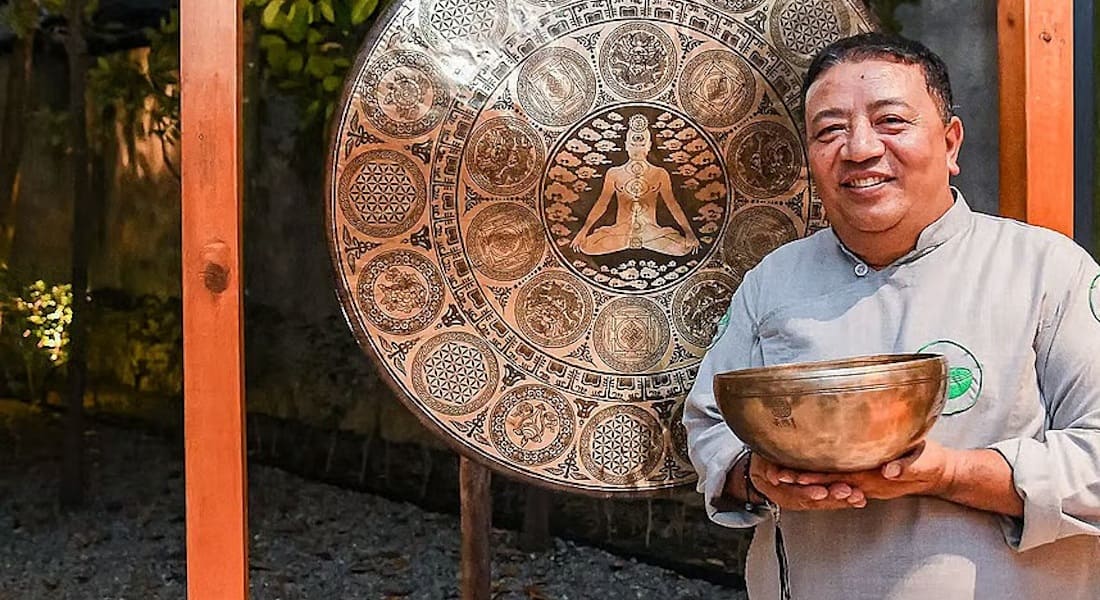
Santa Ratna Shakya, known as Master Santa, is an artisan and sound therapist from Patan, Nepal. A member of the Newar Kassa community, he has worked with singing bowls for over 40 years and is credited with creating the Full Moon Tibetan singing bowl.
Read the full article to discover:
- Santa Ratna Shakya’s biography and family history
- His work as a sound therapist, his albums, and his book
- The role of Full Moon bowls in his work as an artisan
- What he says today about the benefits of singing bowls
With that background, you’ll be able to choose your Tibetan singing bowl knowing its history and the story of the man who made Full Moon bowls famous. You’ll also be able to distinguish the traditions he recounts from what has been verified, helping you select the ideal bowl for your sessions.
Let’s start with Santa Ratna Shakya’s background.
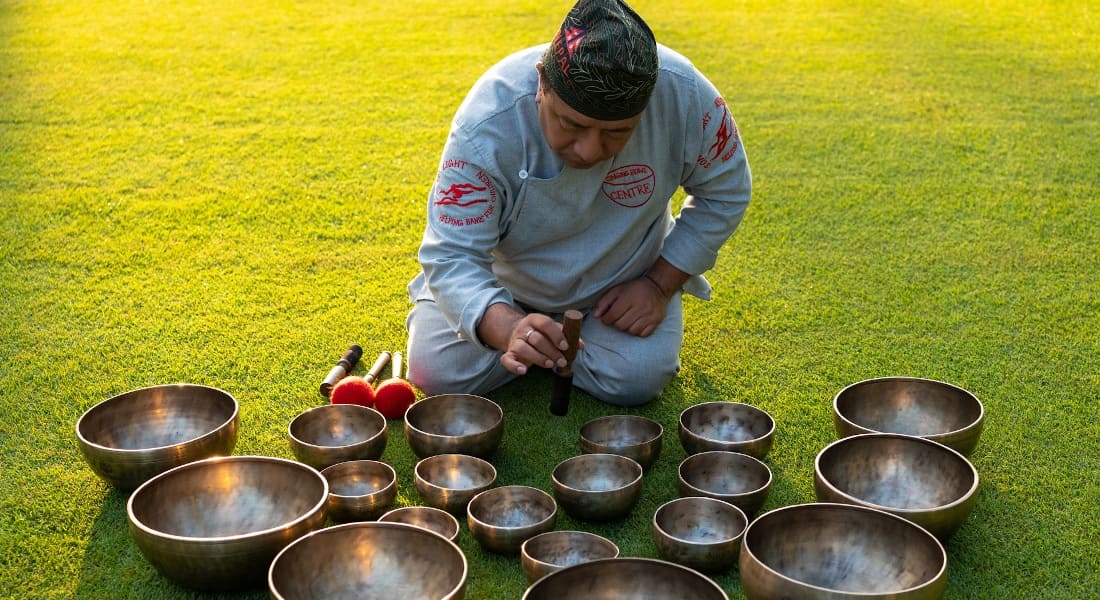
Who is Santa Ratna Shakya, the singing bowl master?
Santa Ratna Shakya is from Nepal, specifically Patan, a city in the Kathmandu Valley. He describes it as an ancient city renowned for its craftsmanship, particularly its singing bowls. He belongs to the Newar people, the valley’s original inhabitants, and more specifically to the Kassa community of Nag Bahal, whose members included skilled metalworkers.
The title “Kassa” was reportedly given to them for their skill in working with bronze and an alloy of seven metals. He says that once these seven metals are combined, they become a single metal called Kassa.
This master artisan goes by different names in different countries. In France, he is usually called Maître Santa; in English-speaking countries, he is known as Master Santa. He also signs his book Santa Ratna Shakya Kasa, a reference to the community he comes from.
Santa Ratna Shakya’s family passed on a love of healing and music. His grandfather was a spiritual healer with extensive knowledge of plants, metals, and minerals. He was also a master of the khin, a traditional drum he made himself and taught younger people to play. His father followed a similar path, becoming a musician and instrument teacher. But Santa lost his father at age 8, leaving his mother to raise six children alone in an impoverished, conservative Nepal.
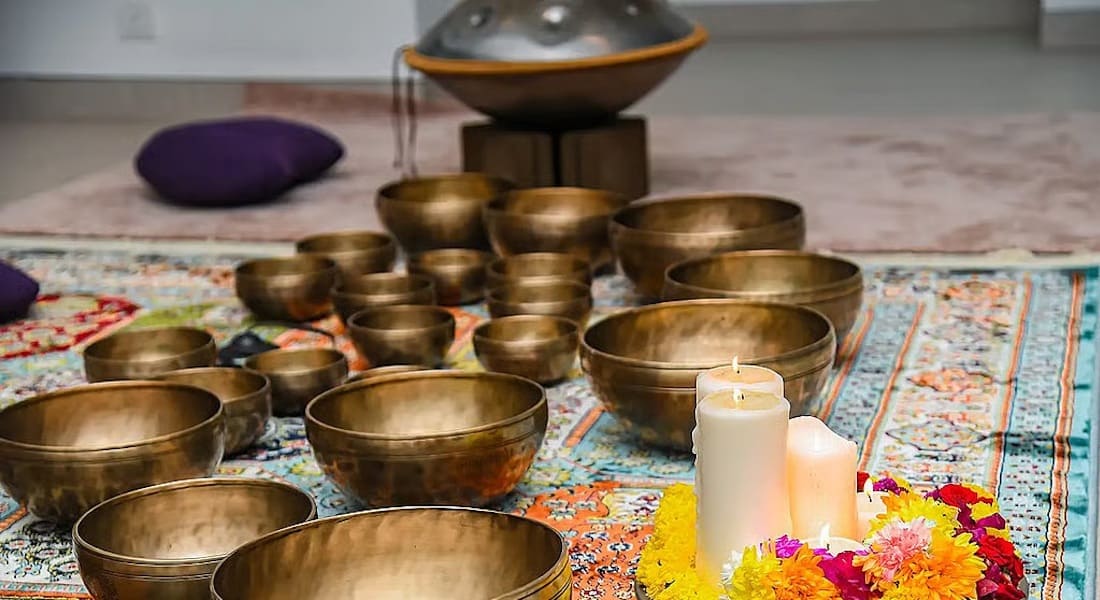
Accounts differ on how many generations his family’s craft spans. Some retailers describe him as a third-generation artisan. However, a 2025 article in Free Malaysia Today describes a seven-generation lineage. I can’t determine which account is correct.
How did Santa Ratna Shakya become a Tibetan singing bowl sound therapist?
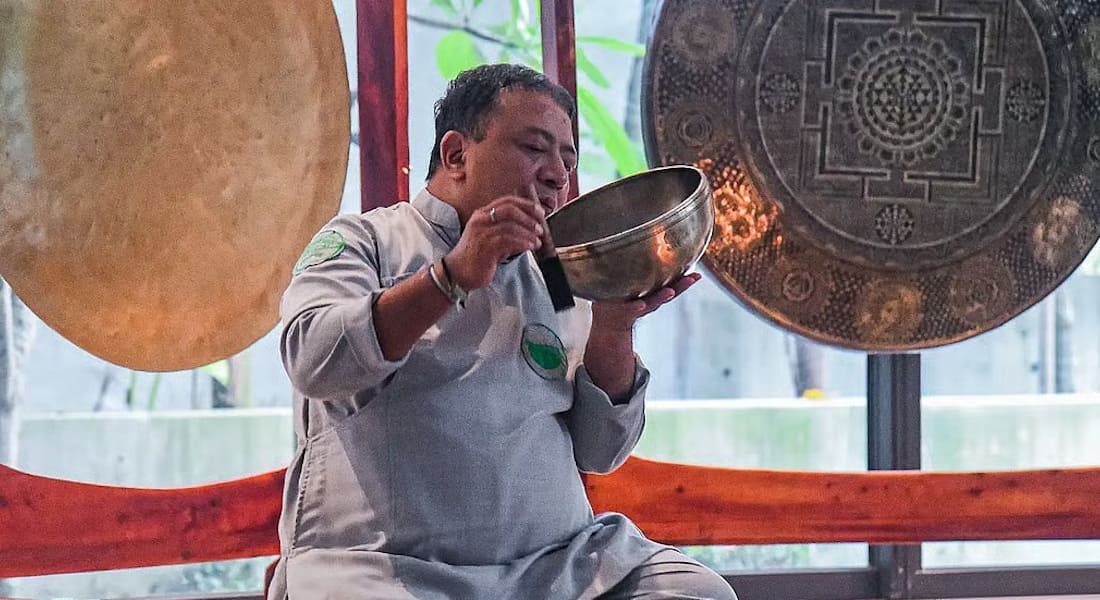
Santa Ratna Shakya has used singing bowls for healing since the mid-1980s. In 2019, an article in the Kathmandu Post described him as a sound healer based in Kathmandu’s Boudha neighbourhood and reported that he had been using bowls for healing for 35 years. It describes one of his aura-cleansing sessions: he first strikes a large Tibetan singing bowl with his fist, then slowly moves it from his student’s right ear to the left ear. Next, he lowers it from the forehead to the navel before bringing it back up near the heart. He says this cleanses the aura and protects the body from negative energy for at least the day. If you have a large enough bowl, you can draw on this gesture in your own sessions: simply hold the bowl in your palm. To learn more about healing through sound, read my guide to sound therapy with a Tibetan singing bowl.
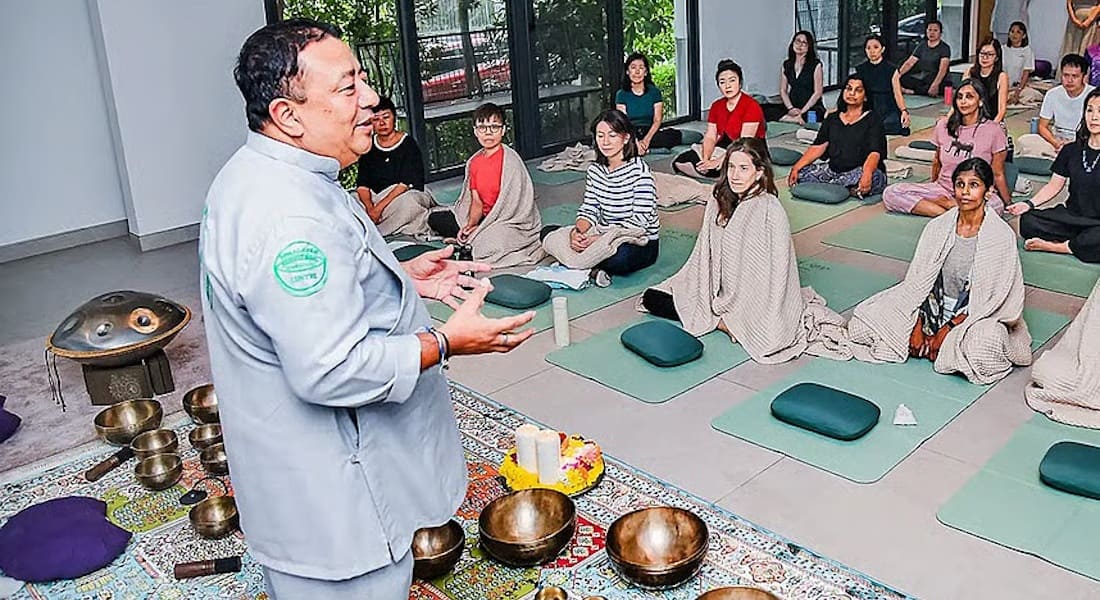
Santa Ratna Shakya teaches his sound-healing method around the world. He has travelled to many countries with his friend Shree Krishna Shahi to teach their techniques. In October 2025, for example, he led a Himalayan sound session in Kuala Lumpur, Malaysia, and workshops under his name have been announced in Australia for 2026. An organization in France is arranging concerts and workshops with him, which could give you a chance to meet him.
He founded the Son of Light initiative with two musician friends, Shree Krishna Shahi and Alberto Parmigiani, a percussionist born in Milan and based in Germany. After a European concert tour, they decided to put their earnings toward schooling for children from low-income families in Nepal. Sources place the initiative’s founding sometime between 2002 and 2005. In a video message, he says more than 20,000 children have received backpacks and school supplies through the initiative.
Music plays a major role in Santa Ratna Shakya’s life. He has recorded eight meditation albums featuring singing bowls: Clear Light, Open Mind, The Path, Bhougolic Awaz, Dreams of Sound, Vision of Third Eye, Dhyana, and Dhyana Aman. The earliest I found was Open Mind, released in Nepal in 2000. He followed it with Clear Light in 2001 and Dhyana in 2006, recorded with Alberto Parmigiani and Shree Krishna Shahi. He has also collaborated with several Nepali artists, including the well-known singer Ani Choying Drolma. If you’d like to hear his bowls, these albums offer an excellent sense of what the instrument can sound like.
Santa Ratna Shakya’s book Himalayan Singing Bowl, Tuning the Mind, Healing the Body was published in 2024. This 118-page hardcover presents his sound-healing method, called Shakya Kasa, which combines chakra work with Buddhist teachings and shamanic practices. It was edited by Salil Subedi, who has written two books on singing bowls himself.
A 2019 documentary features him and his work. Directed by Cordula Stadter, it first aired on German television on Arte on November 10, 2019. The film shows Santa Ratna Shakya and his daughter Suvechhya using seven bowls, one for each of the body’s seven chakras, in their healing sessions. The lowest-pitched bowl, tuned to F, corresponds to the root chakra. Because there is no official examination for singing bowl therapy, Santa himself decides whether his daughter has performed the treatments correctly. To learn how to use the right bowl for each chakra, read this guide to opening and unblocking your seven chakras with a Tibetan singing bowl.
You can watch an excerpt from the documentary below. It’s in German, but you can follow the images of the forge and healing sessions without speaking the language:
What role does the Full Moon bowl play in this Tibetan singing bowl master’s work?
Singing bowl retailers credit Santa Ratna Shakya with creating the Full Moon bowl in France, Nepal, and Japan. However, no source gives a year for its creation, and no patent has been filed. As late as 2017, the program for one of his workshops in Nepal still described it as his latest invention. To learn how it’s made and how to recognize one, read my article on what a Full Moon Tibetan singing bowl is.
He says these bowls draw their power from their metals and sound, as well as the moon’s energy. How long does one take to make? According to Santa, each of his Full Moon bowls is forged just once a month and takes three lunar cycles to complete.
One of his students, however, says a bowl takes five to six months, while a Japanese practitioner puts production at about 20 bowls a year. These timelines call for caution. According to a tradition Santa recounts, people in Nepal who had digestive troubles once filled a bowl with water, struck it beneath the full moon, and drank the water the next day.
The rituals surrounding the making of his bowls matter deeply to Santa Ratna Shakya. Before the full moon, the workshop is cleaned, the artisans trim their nails, and they eat only vegetarian food. These rituals are rarely practiced today, but he still observes them. In the Arte documentary, he wants a moon bowl forged for Sangita, a 21-year-old woman who is eight months pregnant. According to a shamanic belief, moonlight would give the bowl additional power.
The metal was worked by hand in his Patan workshop when it was filmed in 2019. In the documentary, the seven metals are melted at over 1,000°C (1,832°F) for about an hour; their exact proportions remain a trade secret. Four men then hammer the hot metal in rhythm, reheating it about five times until the bowl takes shape. You can explore every step in my article on how a traditional Tibetan singing bowl is made.
The list of seven metals isn’t always the same. In 2019, the Kathmandu Post named copper, tin, zinc, lead, iron, silver, and gold. A 2025 Free Malaysia Today article named mercury instead of zinc for traditional Himalayan bowls. To learn about the role of each metal, read this guide to the seven metals of Tibetan singing bowls and their meanings.
Santa Ratna Shakya has created other singing bowls over the years. The Nirvana bowl, conceived during the COVID-19 pandemic, uses the same alloy as the Full Moon bowl, but it is made four times a month instead of once. The Sunya bowl came after the second wave of COVID-19, which was especially deadly in Nepal. Its name means “zero” or “infinity,” and he designed it to help customers relax and sleep deeply. He also offers a bowl designed for yoga.
What does Santa Ratna Shakya say about the benefits of Tibetan singing bowls?
In 2019, Santa Ratna Shakya was cautious about what a bowl could cure. He told the Kathmandu Post that the sound of singing bowls could help people heal because its effects are primarily emotional and psychological. He added that “we probably won’t be able to cure a disease, but we can help a person feel better.” In the same article, Nepali neuropsychiatrist Ritesh Thapa said singing bowls could serve only as a supportive therapy, like yoga. In his view, severe depression or anxiety still requires medication.
In 2025, Santa said sound helps people relax mentally, while vibration promotes blood circulation and gives the body a feeling of lightness. He also spoke of couples who had wanted to separate but reportedly reconciled after his sessions, and even mentioned people with cancer.
One point needs to be absolutely clear: a Tibetan singing bowl cannot cure cancer. Its sounds can, however, accompany patients by offering a genuine moment of relaxation, as I explain in this article on Tibetan singing bowls and cancer.
To enjoy the benefits of your singing bowl, it’s best to think of it as a way to relax and feel better alongside medical care when you need it.
Bring Master Santa’s legacy into your singing bowl practice
Santa Ratna Shakya is an artisan, sound therapist, musician, and teacher. You now know his story, his family’s history, and the place Full Moon bowls hold in his work.
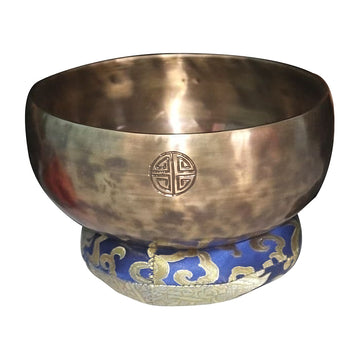
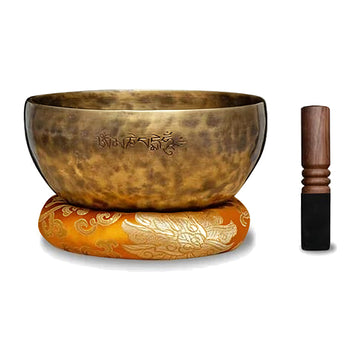
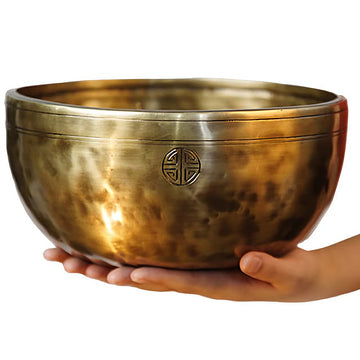
To experience the rich sound of these bowls yourself, you still need to find one whose sound truly moves you. That’s why I personally recommend Instruments du Monde, a store with a wide selection of Tibetan singing bowls, including several Full Moon bowls. This Full Moon Tibetan singing bowl comes from the line Santa Ratna Shakya made popular and will be a perfect companion for your meditation sessions.
Make this singing bowl yours today by clicking the image below:
Now that you know Master Santa’s story, are you aware of the benefits associated with each note this instrument produces? Find out in our guide to choosing a musical note when buying a Tibetan singing bowl. You can then choose your next bowl with confidence. Or explore our complete guide to singing bowls to learn even more. This Asian instrument will hold no more secrets for you.


